The last story gave an overview of the first few years of Thomas and Lillian’s early years together; from their marriage in Wodonga in 1907 to their move to Wonthaggi, and life in the Tent cities which housed the first workers moving to the coalfields.
Let’s take a step back to their marriage celebrations.
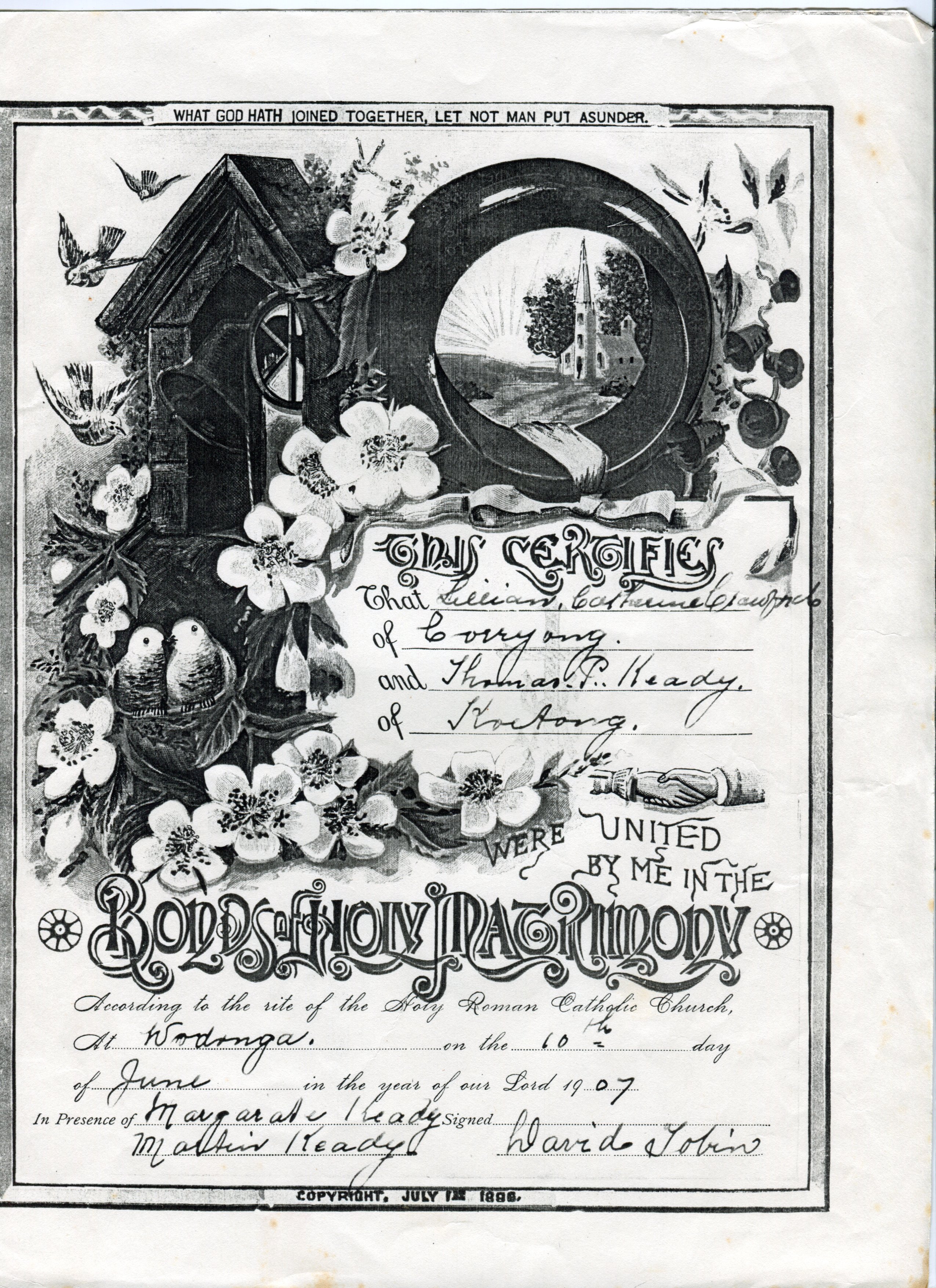
At the time of their wedding on 10th June 1907, at St Augustine’s, Lillian’s place of residence is given as Corryong, where her parents, Robert Henry and Catherine “Kitty” Crawford(nee Gorman) were living. However, Lillian was most likely boarding in Tallangatta, where she was working. Thomas Keady is noted as living at Koeting on the road between Wodonga and Corryong, however he was also living away from home, working in gold fields at Sandy Creek, just outside Tallangatta. Thomas was 33 years old and Lillian was 26 years old.
Family Life at the time.
Thomas Patrick Keady
Thomas was one of nine children to John Francis Keady (1840-1902) and Margaret O’Leary. At the time of his wedding his father had passed away 5 years before, and four of his eight brothers had already died, two in infancy.
He only had one sister, Mary Ann Keady, the youngest of the nine. The whole family were working on the land at Koetong. Besides Thomas and his immediate family, Thomas had his Uncle Patrick, Auntie Mary and their twelve children. In addition another Uncle, James Henry KEADY, seems to have used Koetong as a base for prospecting and Tin Mining ventures around the Upper Murray area.
Koetong was quite a remote location at the time, just a couple of pubs, which served as a staging post for coaches travelling between Wodonga and Corryong to the East. It was 70 km west to Wodonga and about 50 km east to Corryong.
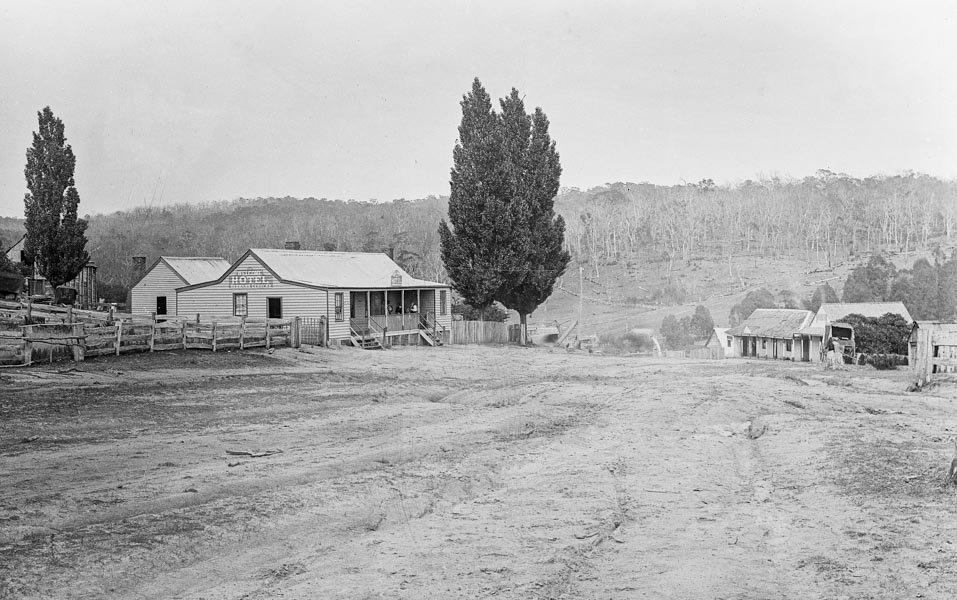
(The above photo from the State Library of Victoria, although not dated was probably taken about the turn of the 20th Century). There were only two buildings in the town, both Pubs. The pub on the left was run by Hermann Gerecke, whose son and daughter both married members of the Keady family.)
The Keady’s were the biggest clan in Koetong. In 1903 there were only 61 adults on the Electoral roll living at Koetong, and 10 of those were Keadys.
Lillian Catherine “Lily” Crawford
Lillian was one of four girls in a family of ten. Lillian’s parents Robert Henry Crawford and his wife Catherine Gorman, or “Kitty” had married at Round Plain near Jindabyne in 1871. About 1895 Robert, Kitty and the family of ten settled in Corryong after Robert had tried his hand at various trades including Publican, prospector and the fur trade. (Extract from his own memoir)
Lillian would have been in her mid teens by the time the family moved to Corryong. The following family group photos shows Lillian in her early 20s standing at the back next to her father. (Lillian, 2nd from right standing)
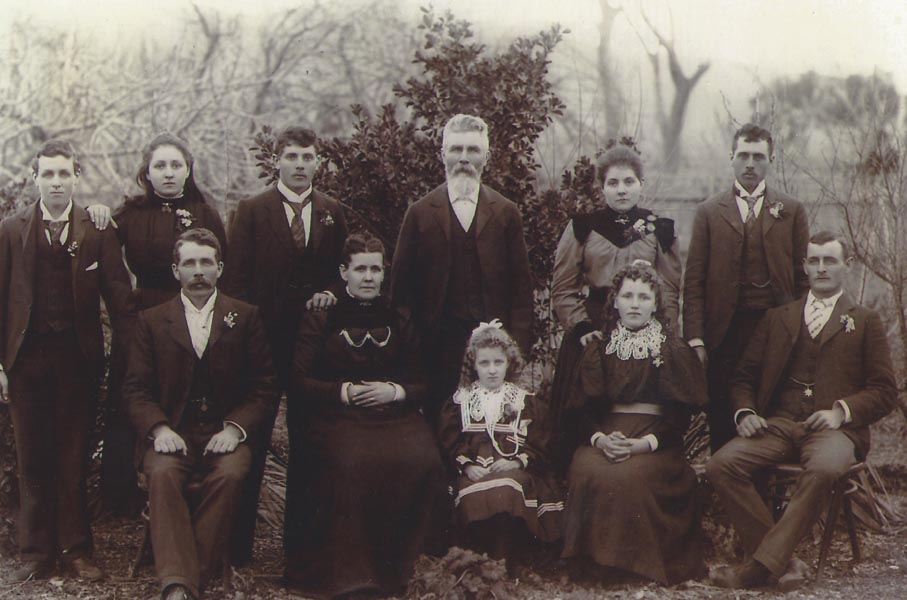
The following photo has been taken a few years latter as Emma, the youngest in the family now looks like a teenager. Probably a year or two before Lillian’s marriage. (Lillian, back left, Ann on right, Kate, sitting with book, Emma at her side)
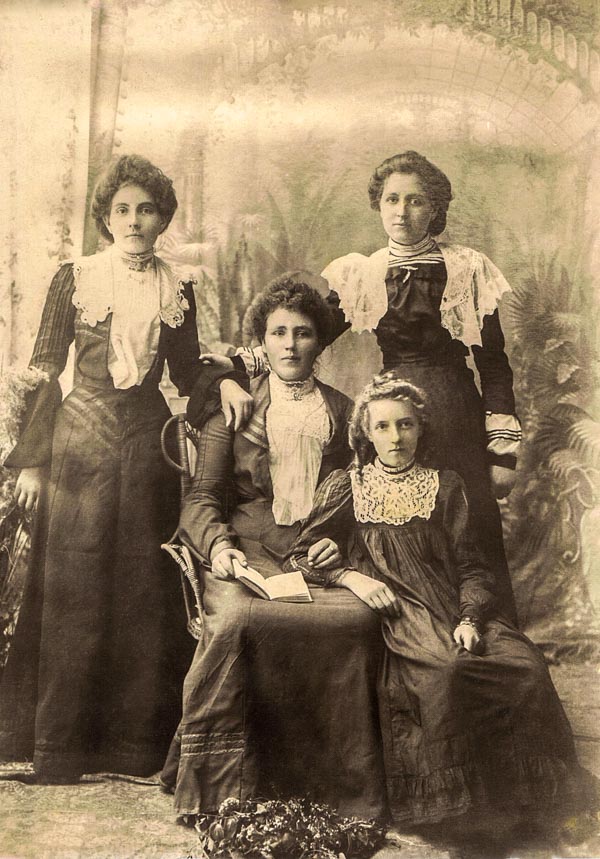
According to Thomas and Lillian’s son Robert, Lillian used to work at Hills Coffee Palace in Tallangatta, and possibly “popped the question” there.
Another son, George recounts that Thomas was working at the Sandy Creek Gold Fields when he met Lillian. The Sandy Creek goldfields are about 3-4 kilometres out of Tallangatta, where many alluvial gold claims were being worked.
What was a Coffee Palace ? Was Lillian serving Lattes and macchiatos ?
Probably the best description of a Coffee Palace is, “A pub with no beer”.
Through the latter half of the 19th Century and into the early part of the 20th Century there was a strong Temperance movement in Australia.
In the second half of the 18th Century until the Depression of 1891-92, immigration was extremely high from Britain for those still seeking to make their fortune on the Goldfields, and the more wealthy gentry who were keen to invest in the booming economy.
Accomodation was in high demand particularly in the major ports of Melbourne and Sydney.
The so called “Coffee Palace” was developed to meet this accomodation demand, without the temptation of Alcohol.
The term “Coffee Palace” came from England where such establishments had been common for some centuries. They provided a place where people could congregate and socialise without getting drunk. The only alternative drinks were Tea, which was highly taxed and very expensive, and the local water which at those times meant you risked sickness or death from any number of water borne diseases. Coffee was relatively cheap and used boiled water, so this minimised the chance of getting sick.
Most major towns had a “Coffee Palace” about the time Lillian and Thomas got married. There were Coffee Palaces in Corryong, Tallangatta, Wodonga and Albury. In the early part of the 20th Century, the term “Coffee Palace” fell out of use, and these establishments became known as “Motels” or “Guest Houses”.
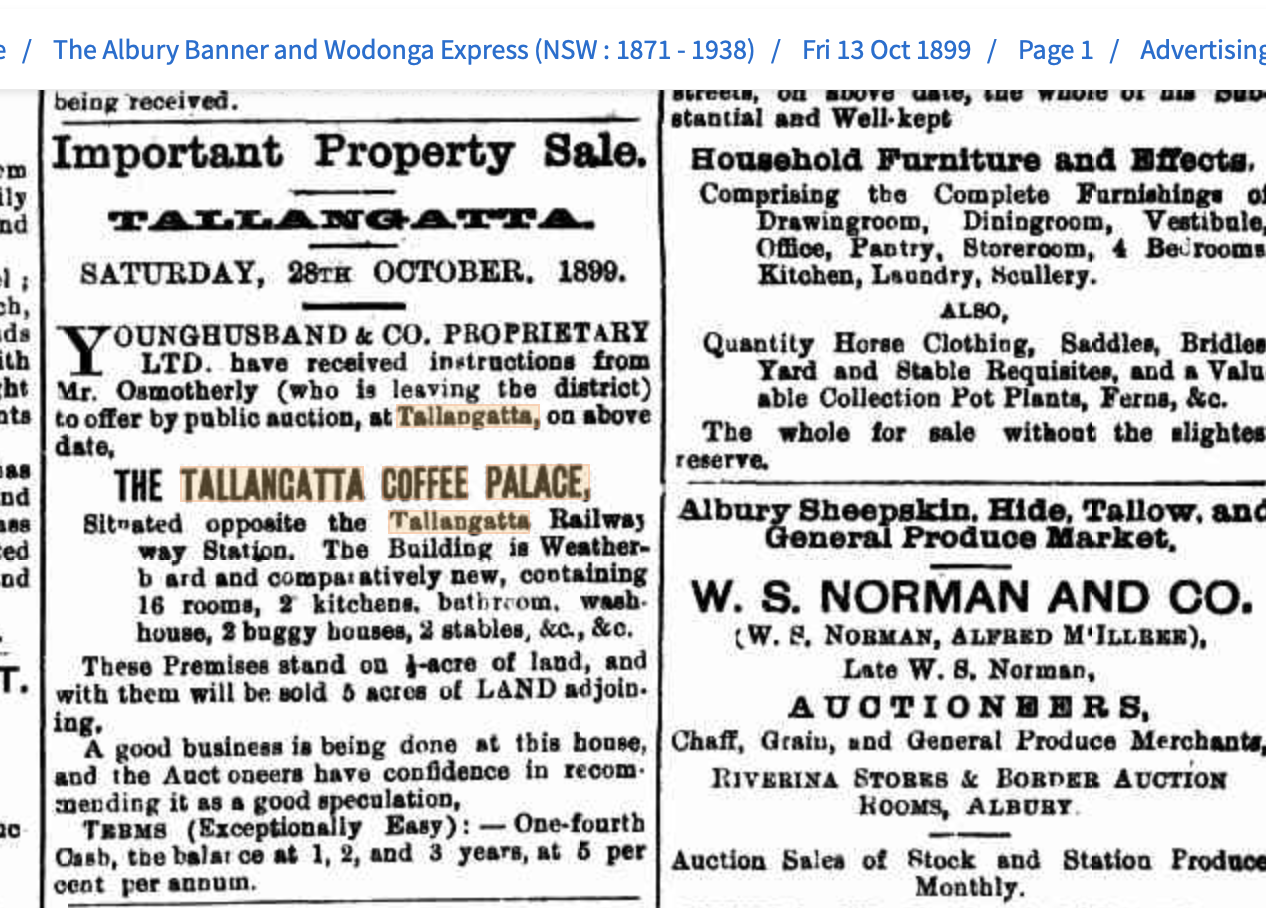
About the time Lillian worked at the Tallangatta Coffee Palace it was quite a large establishment. A few years before the Wedding in 1899, the Palace was put up for sale; it had 16 rooms, 2 kitchens, bathroom, 2 buggy houses and 2 stables.
The Big Day
In the lead up to the Wedding Day, it is understood that Lillian’s dress was prepared by Catholic Nuns in Albury, where she also received instructions in the Catholic Religion.
It is perhaps more likely that the Catholic Nuns were living in the Convent which was adjacent to the Church where she was to marry, St Augustine’s Church, Wodonga.
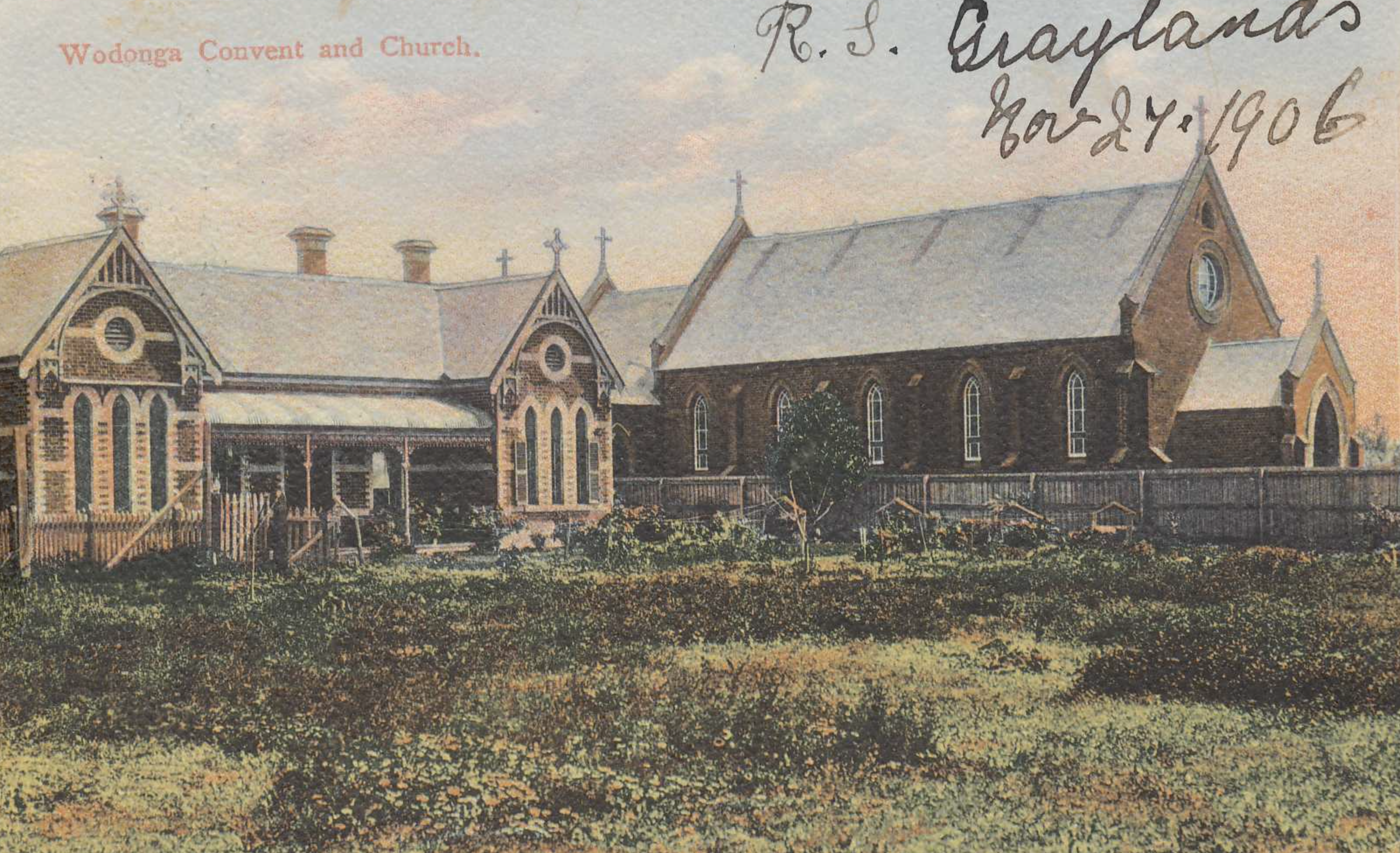
The Wedding and Reception certainly seemed to have been a low key affair. The Wedding was celebrated at St Augustine’s church on a Monday morning, 7 June 1907. After the Wedding Ceremony the Wedding Party moved down High Street a short distance, to Miss Moore’s Railway Hotel where a wedding breakfast was partaken.
Lillian and Thomas then caught the afternoon train to Melbourne for their honeymoon.
(The Railway Hotel was burnt to the ground a couple of years latter and replaced by a substantial brick built hotel, which after going through many owners and facelifts was demolished in 2020. Miss Moore sold up in 1909, and moved to take up a licence for a Hotel in Cootamundra.)
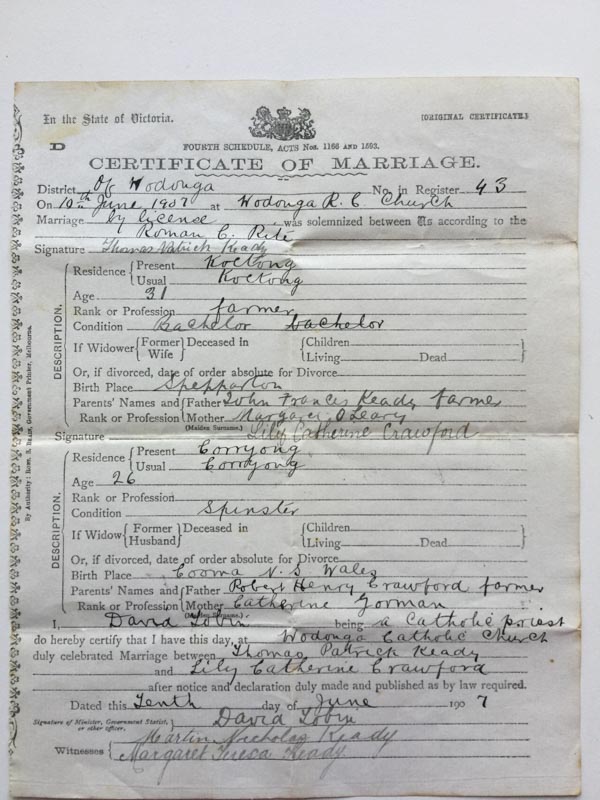

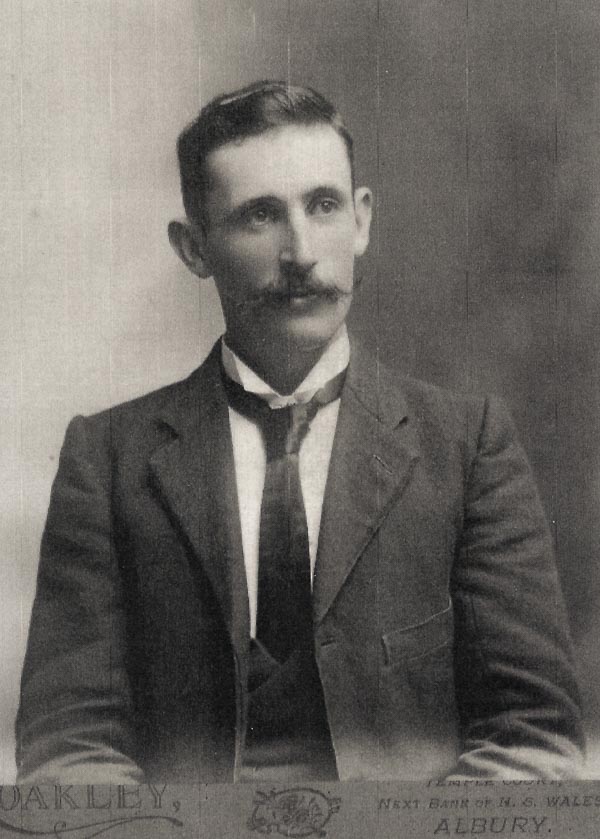
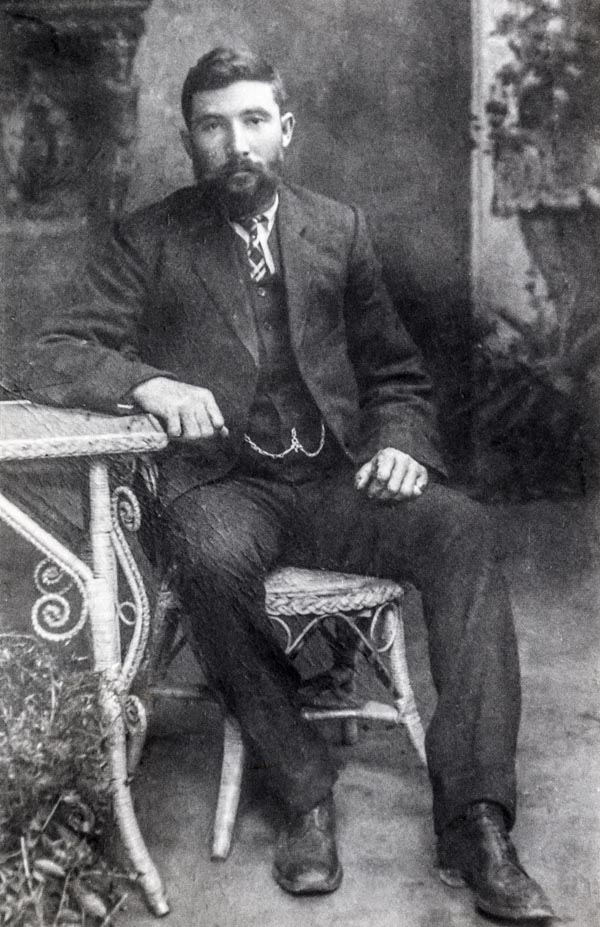
The best man was Martin Keady, Thomas’s younger brother and Maggie Keady (Margaret Teresa Keady), Thomas’s cousin acted as Bridesmaid. There is no mention of other family members in an article published by “The Border Morning Mail and Riverina Times on Wednesday, 12 June, 1907. Typically such newspaper reports of weddings would include a long list of attendees and describe the gifts each had given to the bride and groom.
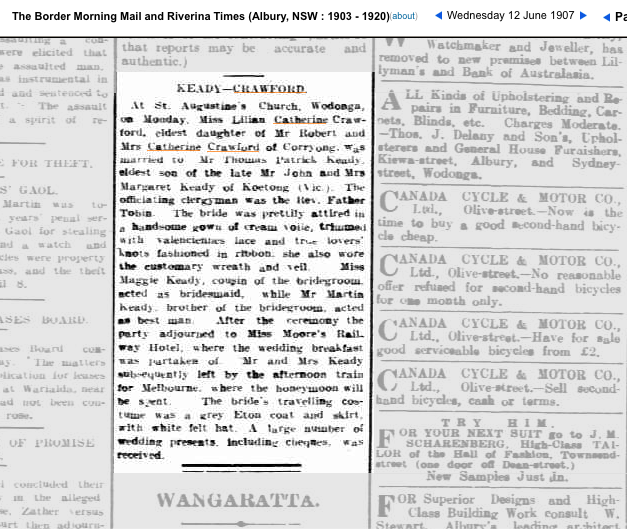
The Best Man, Martin Keady
The family “story” is that Lillian’s parents were not at the Wedding and the following letter from her father seems to confirm that story. An attempt has been made below the letter to transcribe the content. Punctuation was clearly not a strong skill for the writer, Lillian’s father Robert. He hasn’t done a bad job at all, considering he had no formal schooling.
While Lillian’s parents weren’t actually at the Wedding, this seems to indicate the strong feelings they had for her.
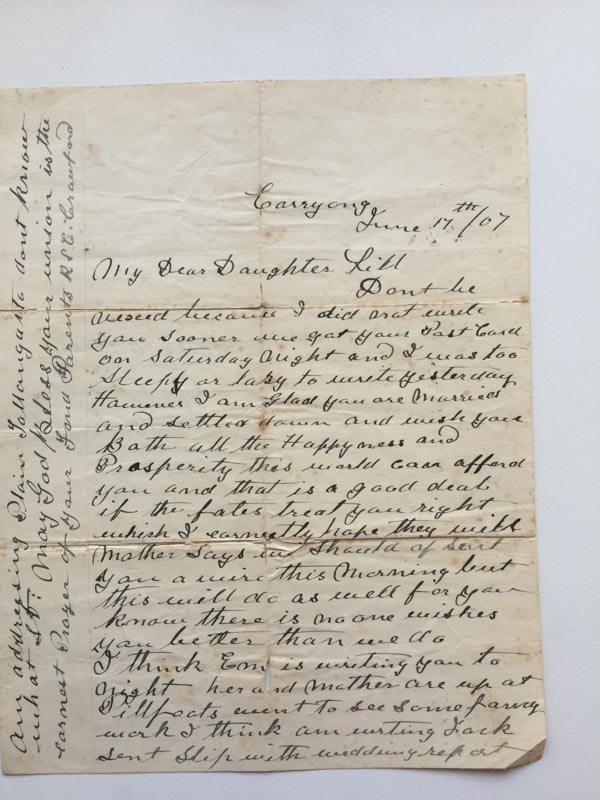
Corryong
June 17th/07
My Dear Daughter Lill
Don’t be … because I did not write you sooner we got your Post Card on Saturday night and I was too sleepy or lazy to write yesterday.
However I am glad you are married and settled down and wish you Both all the Happiness and Prosperity this world can afford you and that is a good deal if the fates treat you right which I earnestly hope they will
Mother says we should have sent you a wire this Morning but this will do as well for you know there is no one wishes you better than we do
I think Ann is writing you to night her and mother are up at ….pots(?) went to see some fancy work I think am writing Jack
Sent Slip with wedding report.
Writing on side.
Am addressing Plain Tallangatta don’t know such at ST: May God Bless your union is the earnest Prayer your Fond Parents R & C Crawford.
 Keady Family in Victoria
Fabulous work Philip. So appreciative of your zeal and careful research. Cheers Joan
Sent from my iPad
>
LikeLike