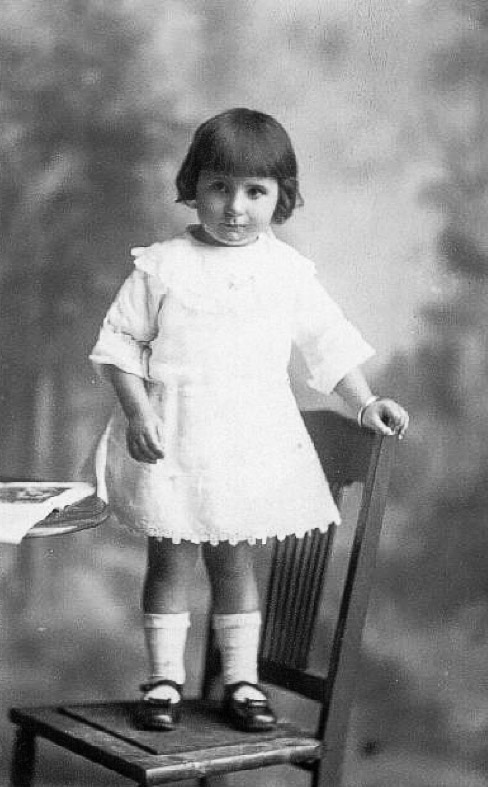
When Frances Lillian “Francie” Keady was 13 years old a younger sister finally arrived. Mary Margaret Keady, or “Mollie” was born at Wonthaggi on 30 June 1922.
Mary “Molly” Keady, about 1925-26
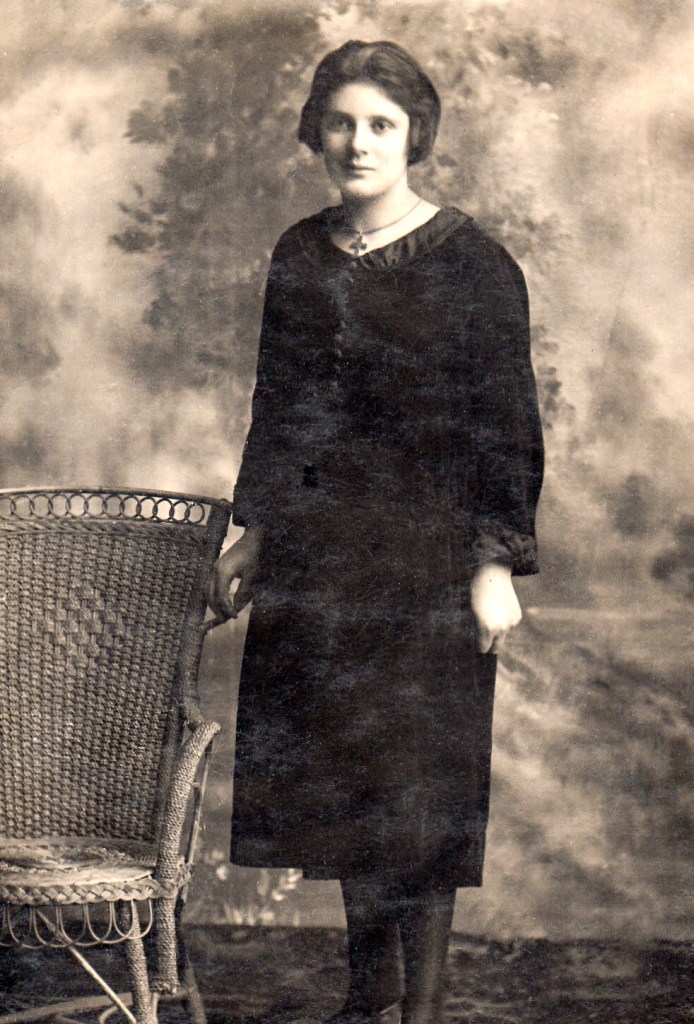
The photo below was sent by Francie to her Aunt Annie, on the occasion of her 15th birthday, a couple of years latter.
Francie Keady, 15th Birthday, 13 July 1925. Postcard to Auntie Anne in Albury.
The last child of Thomas and Lillian to arrive was George Keady, who was born in Wonthaggi on 10 December, 1924.
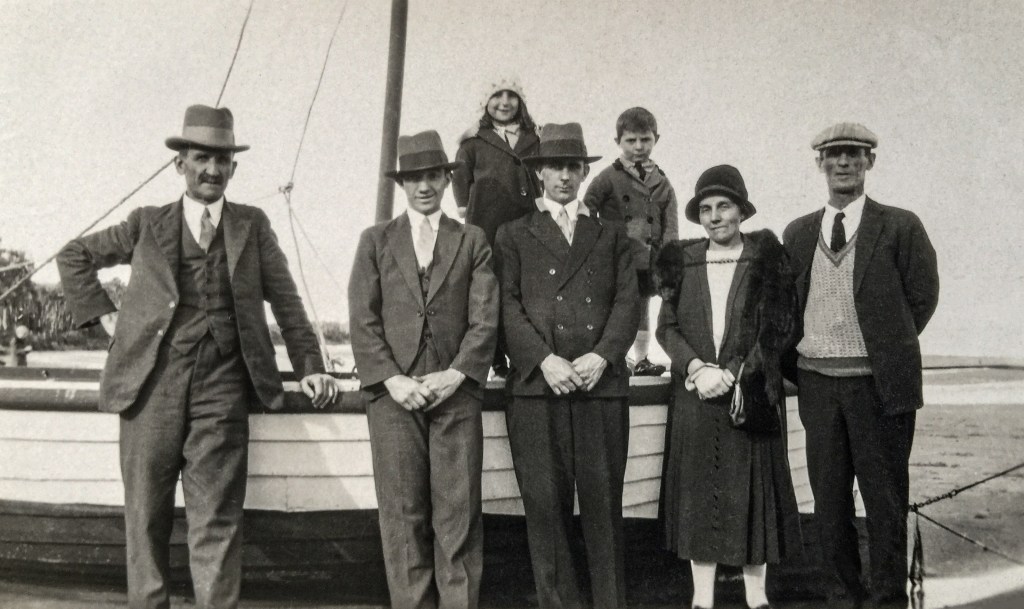
The age spread across the family is pretty obvious in the photo below. The occasion or location is unknown, but everyone certainly seems dressed up, even the youngsters, Molly and George standing on the deck of the yacht behind their older brothers Fred and Jack. (The older gentleman on the left has been identified as Mr Vesteine, by someone !!! Help with clarifying his relationship to the family would be great.)
Molly, George on the boat. Front Mr Vesteine, then Fred, Jack, Lillian, Thomas (L-R). About 1930
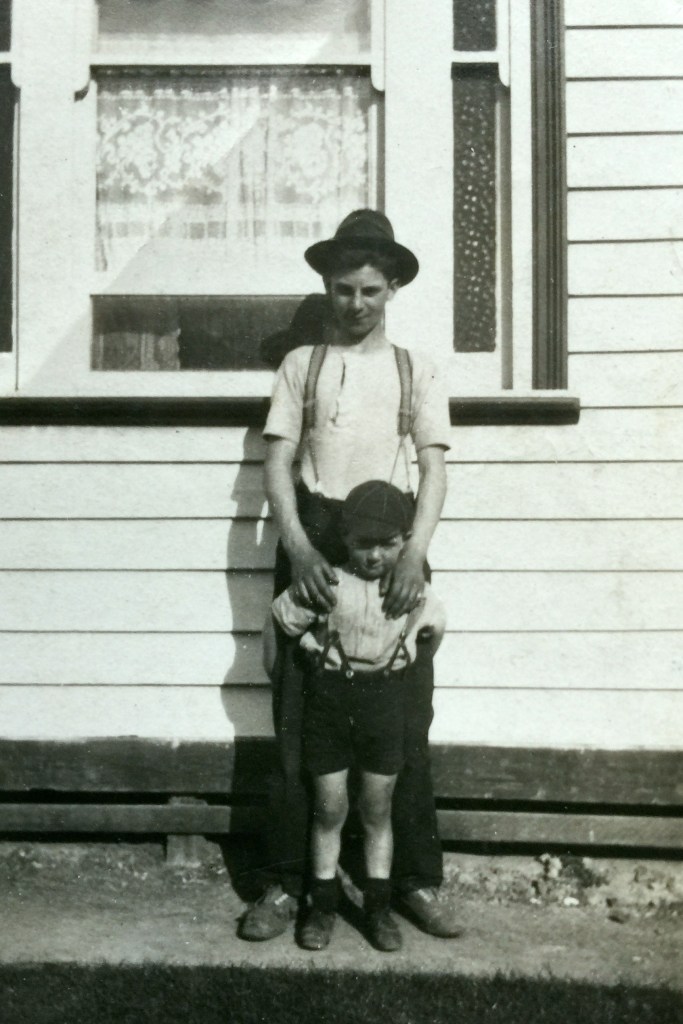
The photo below must have been taken about the same time or a little earlier; perhaps around 1930. George Keady is standing in front of his older brother Fred, with the background being the side of the family home in Cameron Street, Wonthaggi.
It’s worth noting Fred’s grubby hands. If indeed the photo was taken about 1930, then Fred was in his late teens and had been working at the State Coal Mine since he was 14. Perhaps he has just returned from a shift underground.
Or perhaps Fred and George were doing some work in their father’s famous vegetable garden because it looks like George has been crawling around on the ground given the dirt on his knees.
This is one of the few informal photos of family members. In most family shots everyone is meticulously groomed.
Fred and younger brother, George Keady at Wonthaggi.
Points of Clarification
The stories accompanying each photo are pure guesswork. There are very few, if any photos with any written explanation. We are just lucky that names are noted on a few.
The last photo of Fred and George was distributed a few years back with a caption of John Dennis “Jack” Keady and George. Some recent photos from the collection of Veronica Keady, Fred’s daughter clearly identify the older boy in this photo as “Fred”. So apologies for that mistake.
The following photo of a very young Roy Keady was taken about 1918. Roy was the sixth in the family of Thomas and Lillian Keady.
Roy Keady about 1918, source: son Michael
About the time the above photo of Roy was taken, James Kevin “Kevin” Keady was arriving in June, 1918. In quick succession, James “Jim” was born in November, 1919. (I’m sure there must be a story about how two boys in succession ended up with the same name, “James” ? Any suggestions would be appreciated.)
Following a long run of boys, a second daughter, Mary Margaret “Molly” Keady was born on 30 June, 1922.
The photo below of Kevin and Molly (about 1928) was taken and then developed by their older brother Fred who would have been 14-15 years. Unfortunately no photos have surfaced of young Fred.
Kevin Keady with younger sister Molly Keady. c. 1928.
Hectic Home Life for Lillian
Life at home must have been pretty hectic. About the time of the above photo, Molly and Kevin’s eldest brothers Jack and Thomas were 20 and 18 years old respectively, and had been working in the State Coal Mine for a few years. Their father Thomas Patric Keady had started at the State Coal Mine in 1912.
The older boys, Jack and Thomas had both started working at the State Coal Mine in 1923, Jack was 15 and Thomas 14 years old. A couple of years later in 1927, Fred started in June as a 14 year old and Robert shortly after in October, 1927 as a 16 year old.
This period in the early to mid 1920s must have been a crazy time for poor Lillian. Lillian was pregnant a lot of the time, there were todlers underfoot and the older boys and her husband were possibly coming and going at all hours according to the shifts they worked at the Coal Mine. Well done Lillian !
The following photos are from the early days in Wonthaggi, in the period from about 1912 as the family of Thomas Patrick Keady “Tommy” and Lillian Catherine Keady(nee Crawford) started to grow.
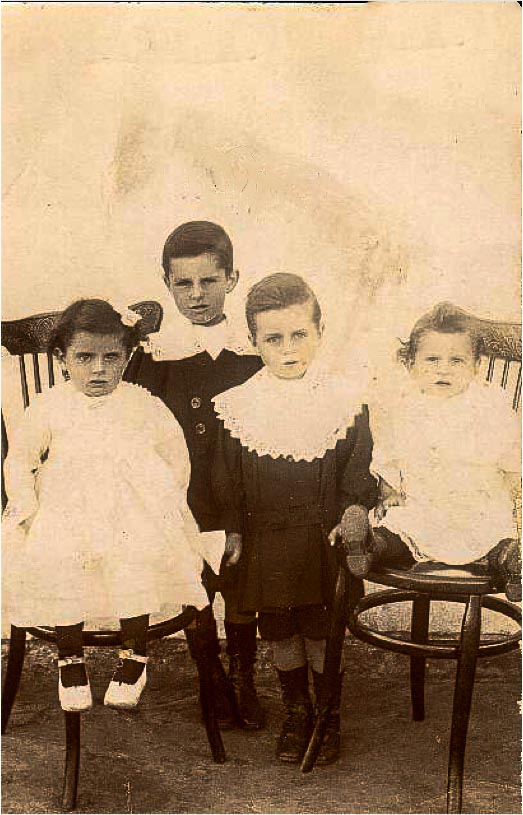
Francie, Tom and Jack, about 1912Thomas and Lillian’s children about 1913- Francie, Jack, Thomas and Robert
Birth dates
John Dennis “Jack”, born in Albury, NSW on 30 December 1907
Thomas Patrick “Tom” Keady, born in Powlett River, Vic on 2 June 1909
Frances Lillian “Francie” Keady, born in Powlett River, Vic on 13 July 1910
Robert William “Bob” Keady, born in Wonthaggi, Vic on 20 August, 1911
Note: The area surrounding the State Coal Mine was officially known as Powlett River until the township of Wonthaggi was proclaimed in August, 1910.
What’s the story behind the frilly collars on the boys ?
You might be wondering why the boys, other than baby Robert, are wearing such frilly collars. Initial thoughts turned to some formal occasion such as a first communion. This may well be the reason for the formal photography session, however it seems that this particular fashion style was common for boy’s school uniforms in the late 1800s and early 1900s.
The uniform typically included a formal jacket and a frilly collar. It is most obvious on Jack in the first photo. This fashion was following trends in both England and America at the time.
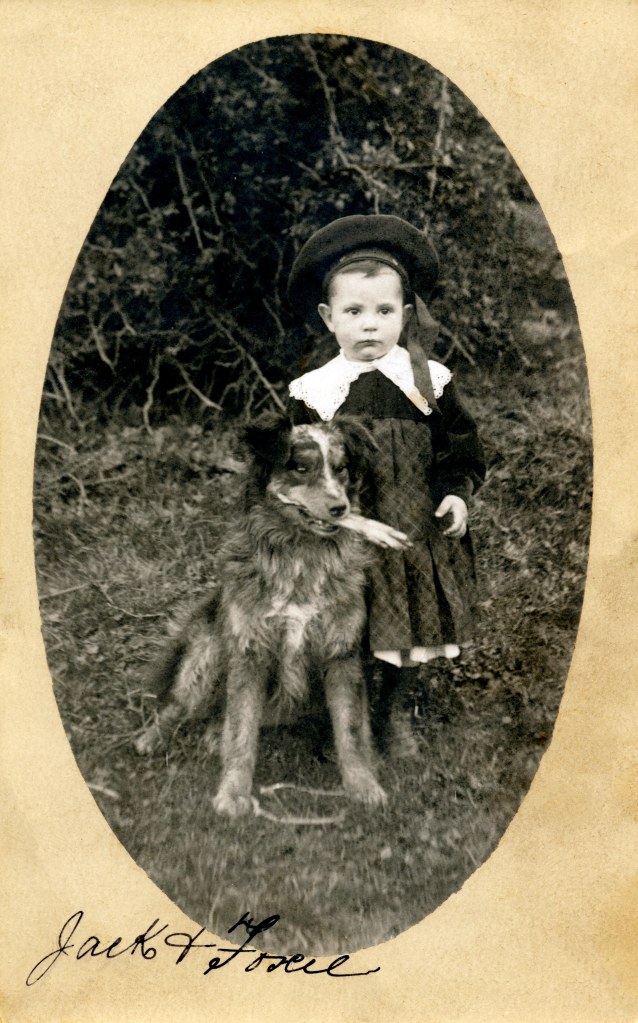
John Dennis “Jack” Keady with Foxie about 1910, probably taken at Powlett River (Wonthaggi) because Jack looks to be about 2-3 years old. Jack was the first child of Thomas and Lillian Keady, born in Albury on 30 December, 1907.
This photo is on a postcard, undated, from Lillian Keady (nee Crawford) to her mother-in-law Margaret Keady (nee O’Leary) who was living at Koetong, near Corryong .
The original postcard was in the personal collection of Molly Keady.
Interesting to note that Lillian refers to herself as “Lilly” when signing off the postcard, and refers to her husband, Thomas Patrick Keady as “Tommy”.
Blogging has been a bit quiet lately. But expect a bit more action over the coming months, with a focus on the Keady Family at Wonthaggi. Some of you may well have seen these before, but it seemed like a good idea to share them around to the wider family.
Thomas Patrick Keady(1874-1946) and Lillian Crawford (1881-1962) moved from Albury to Wonthaggi or Powlett River as it was then called in 1908 or early 1909. Wonthaggi was not proclaimed as a town until 1 August 1910.
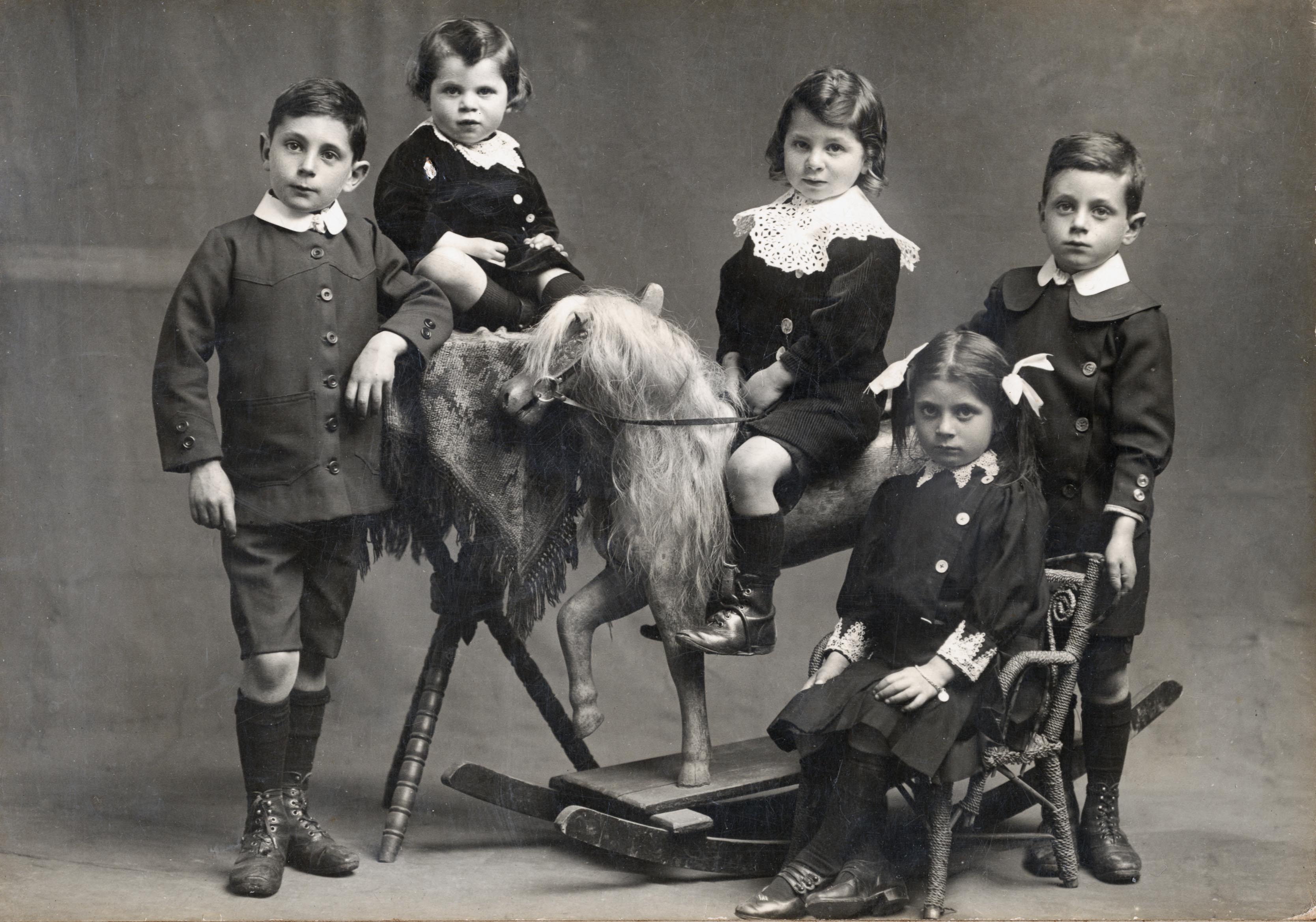
This family portrait of Tom and Lillian’s young family was taken about 1915 based on the age of Fred Keady who is the youngest, born in 1913. Fred is sitting on the tall table, 2nd from the left, next to his eldest brother Jack.
Left to right. John Dennis “Jack” born 1907, Frederick Ivan “Fred” born 1913, Robert William “Bob” born 1911, Thomas Patrick “Tom” born 1909, and Frances Lillian “Francie” born 1910 sitting at the front.
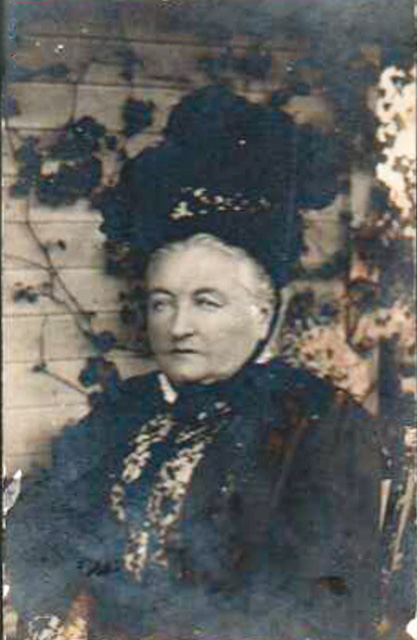
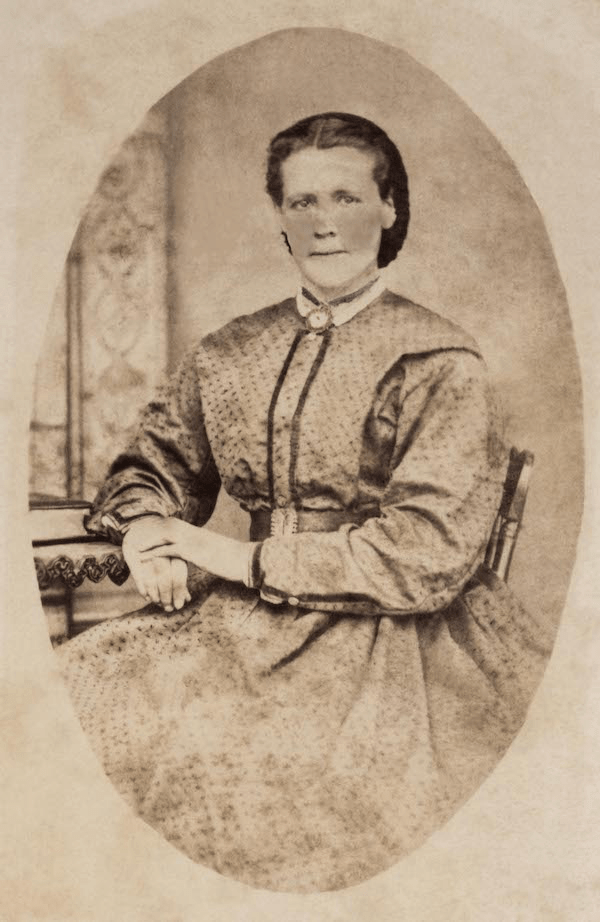
Old photos are rather rare, so this was a lucky find. Through a DNA connection a distant 3rd cousin was kind enough to share this great photo of Catherine Angela Keady (1846 -1925).
Catherine also known as “Kate” or “Agnes” was a younger sister of our great grandfather, John Francis Keady (1840-1902) and his older brother, Patrick Keady (1837-1923).
Catherine was one of the first generation of Keadys born in Australia.
Catherine Angel Keady (1846-1925
Catherine was born on 25th September, 1846, with the birthplace given as “Yarra, Victoria”. Formal Government registration of births did not commence until some years latter. The record below is a Catholic Church record of baptisms performed in the Port Phillip colony at the time of Catherine’s birth.
Baptism Record – Catherine Angela Keady
At the time of Catherine’s birth, the English colonial administrators must have still been having trouble with the Keady’s Irish accent. The Baptism records show Catherine’s name as “Cath Cady, and her father’s name as John Cady. This spelling is the same as that used in the shipping records when John, Honora and their first four children arrived in the Colony in November, 1841.
The meaning of “Yarra” is not all that clear, but her father John Keady was recorded as living at “Half Tree”, Merri Creek in 1847. It is probably a fair assumption that Catherine spent her childhood living on the Keady family farm at Merri Creek. The next record of the family location was in 1856, when John Keady was recorded as living at Pentridge.
The township of Pentridge referred to the location of the first stockade built in Melbourne and was to be developed over the following decades into the infamous, Pentridge Prison. Today, the area is known as Coburg and the old township roughly stretches from Sydney Road to the Merri Creek. (The exact location of the “Half Tree” on Merri Creek, remains a mystery.)
Catherine was the 8th child of John and Honora Keady.
Kate went on to marry Daniel Kenny (1843-1902) on the 13th August 1874 at St Patrick’s Cathedral Melbourne. Daniel’s residence is given as Dargalong, near Nagambie, and Kate’s father’s address is given as “Somerset House”, Carlton. (The exact location of “Somerset House” in Carlton is unknown.). It is worth noting that John Keady also named his house at Nagambie in latter years as “Somerset”. A copy of the original wedding notice is shown below, when Daniel and Elizabeth were celebrating their silver wedding anniversary in 1899.
Silver Wedding Anniversary 1899
Daniel and Elizabeth went on to have 7 children, all of whom were born around the same district, including Nagambie, Murchison and Katamatite.
In latter years they moved to the farming district west of Wagga Wagga in NSW. Their residence is recorded as Ganmain and Coolamon.
The following article from 1895 gives a little insight into life on the land for the family and their strong commitment to the Catholic faith.
Extract from Freeman’s Journal, Trove, 1895
Catherine’s husband Daniel Kenny died at Narrandera in 1902.
The last story gave an overview of the first few years of Thomas and Lillian’s early years together; from their marriage in Wodonga in 1907 to their move to Wonthaggi, and life in the Tent cities which housed the first workers moving to the coalfields.
Let’s take a step back to their marriage celebrations.
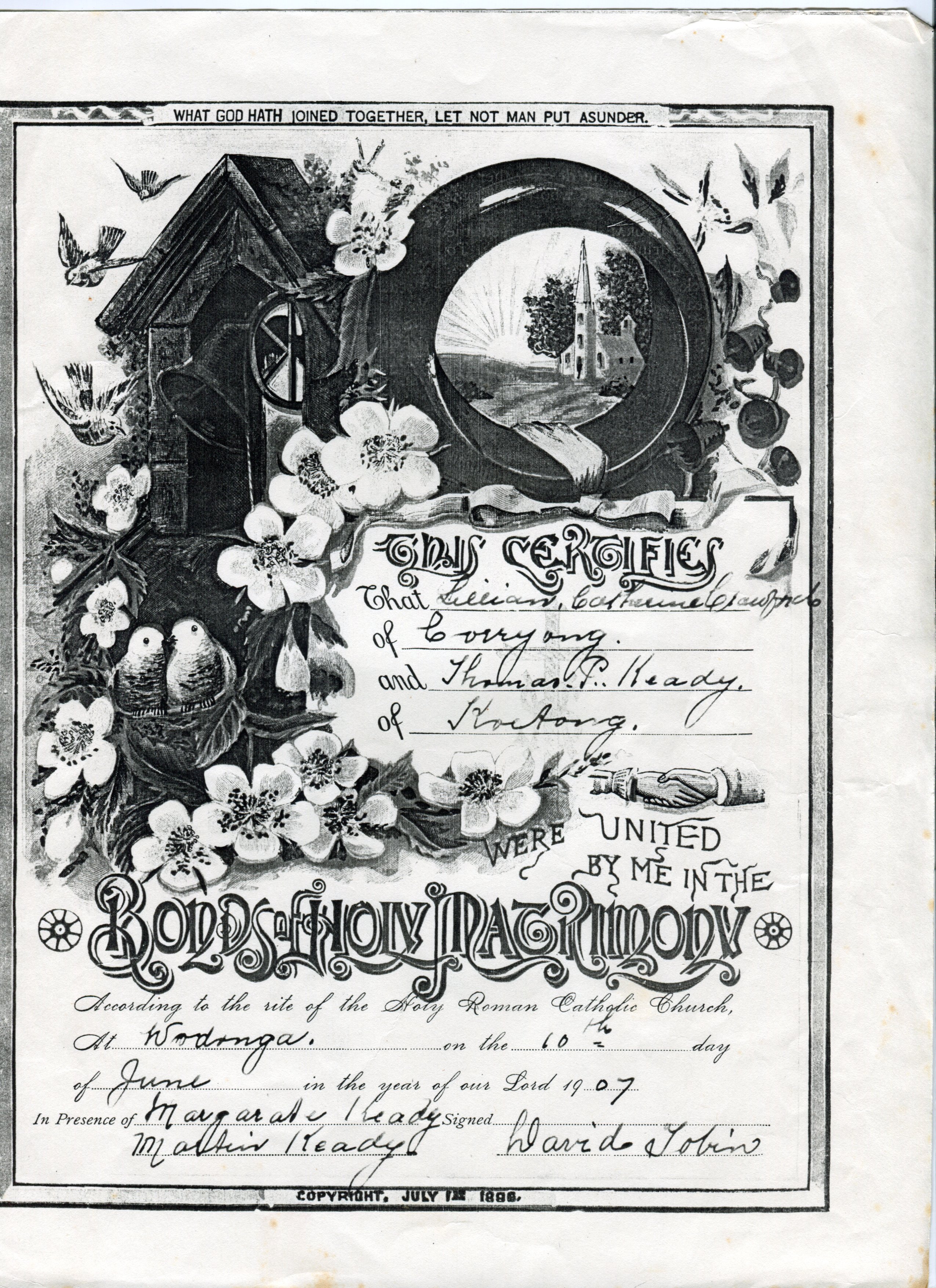
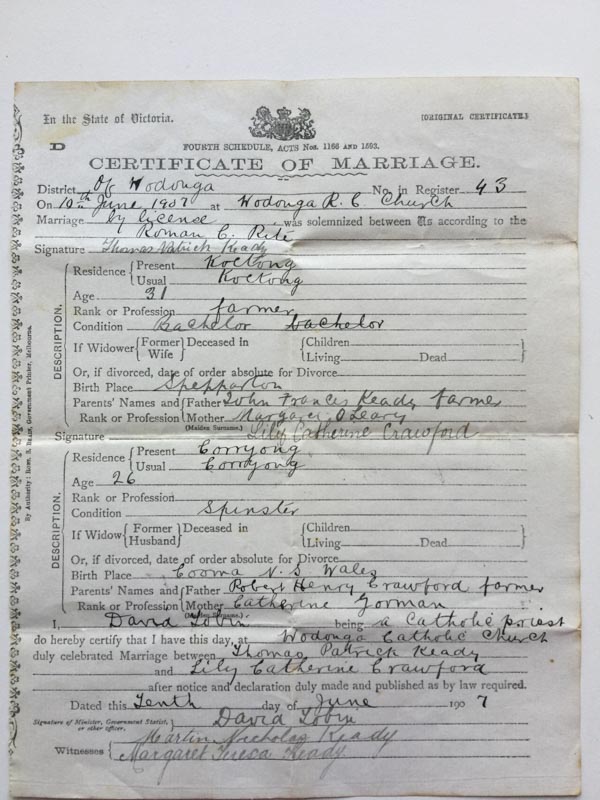
Thomas and Lillian’s Marriage Certificate. Source:Veronica Keady
At the time of their wedding on 10th June 1907, at St Augustine’s, Lillian’s place of residence is given as Corryong, where her parents, Robert Henry and Catherine “Kitty” Crawford(nee Gorman) were living. However, Lillian was most likely boarding in Tallangatta, where she was working. Thomas Keady is noted as living at Koeting on the road between Wodonga and Corryong, however he was also living away from home, working in gold fields at Sandy Creek, just outside Tallangatta. Thomas was 33 years old and Lillian was 26 years old.
Family Life at the time.
Thomas Patrick Keady
Thomas was one of nine children to John Francis Keady (1840-1902) and Margaret O’Leary. At the time of his wedding his father had passed away 5 years before, and four of his eight brothers had already died, two in infancy.
He only had one sister, Mary Ann Keady, the youngest of the nine. The whole family were working on the land at Koetong. Besides Thomas and his immediate family, Thomas had his Uncle Patrick, Auntie Mary and their twelve children. In addition another Uncle, James Henry KEADY, seems to have used Koetong as a base for prospecting and Tin Mining ventures around the Upper Murray area.
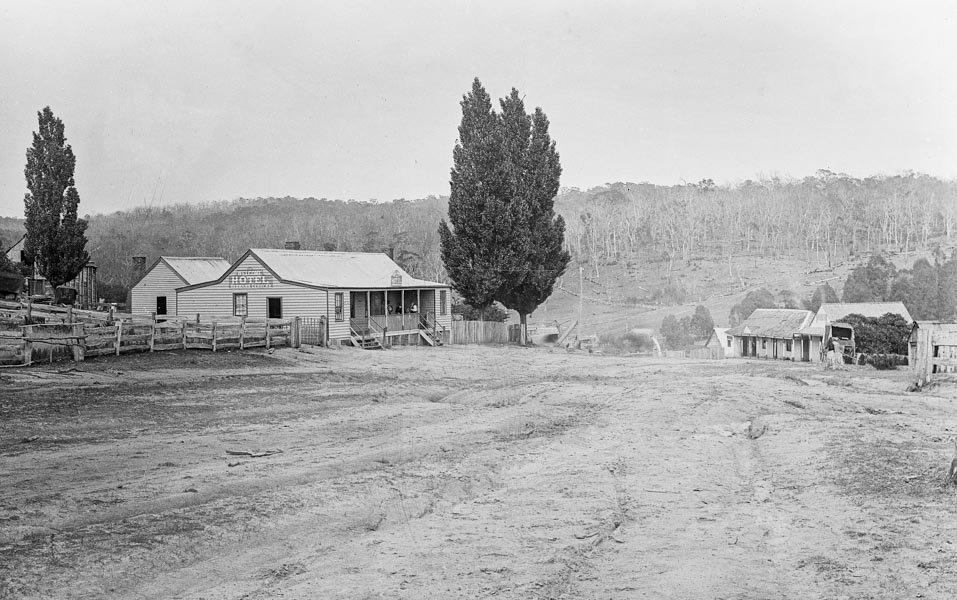
Koetong was quite a remote location at the time, just a couple of pubs, which served as a staging post for coaches travelling between Wodonga and Corryong to the East. It was 70 km west to Wodonga and about 50 km east to Corryong.
Koetong. Source:State Library of Victoria
(The above photo from the State Library of Victoria, although not dated was probably taken about the turn of the 20th Century). There were only two buildings in the town, both Pubs. The pub on the left was run by Hermann Gerecke, whose son and daughter both married members of the Keady family.)
The Keady’s were the biggest clan in Koetong. In 1903 there were only 61 adults on the Electoral roll living at Koetong, and 10 of those were Keadys.
Lillian Catherine “Lily” Crawford
Lillian was one of four girls in a family of ten. Lillian’s parents Robert Henry Crawford and his wife Catherine Gorman, or “Kitty” had married at Round Plain near Jindabyne in 1871. About 1895 Robert, Kitty and the family of ten settled in Corryong after Robert had tried his hand at various trades including Publican, prospector and the fur trade. (Extract from his own memoir)
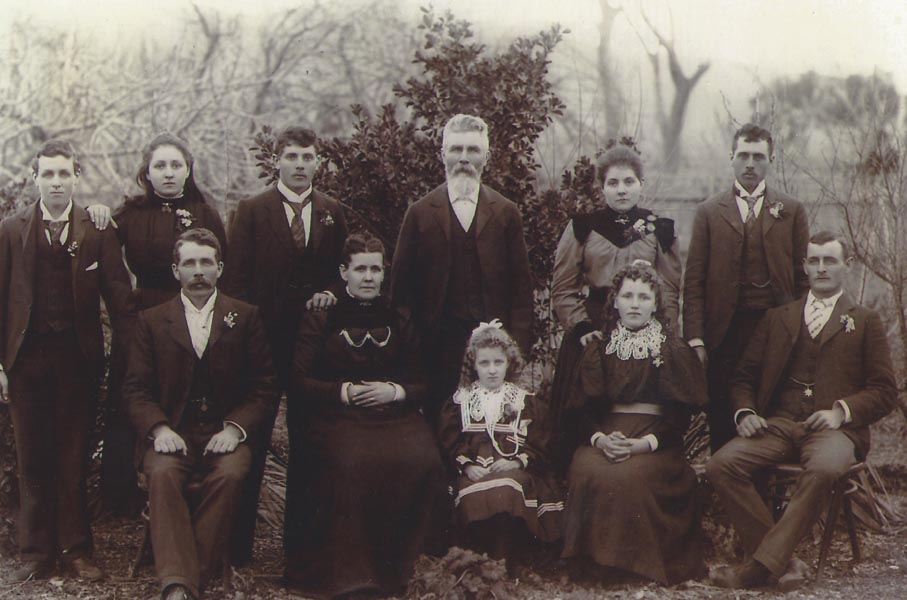
Lillian would have been in her mid teens by the time the family moved to Corryong. The following family group photos shows Lillian in her early 20s standing at the back next to her father. (Lillian, 2nd from right standing)
Crawford Family – about 1900
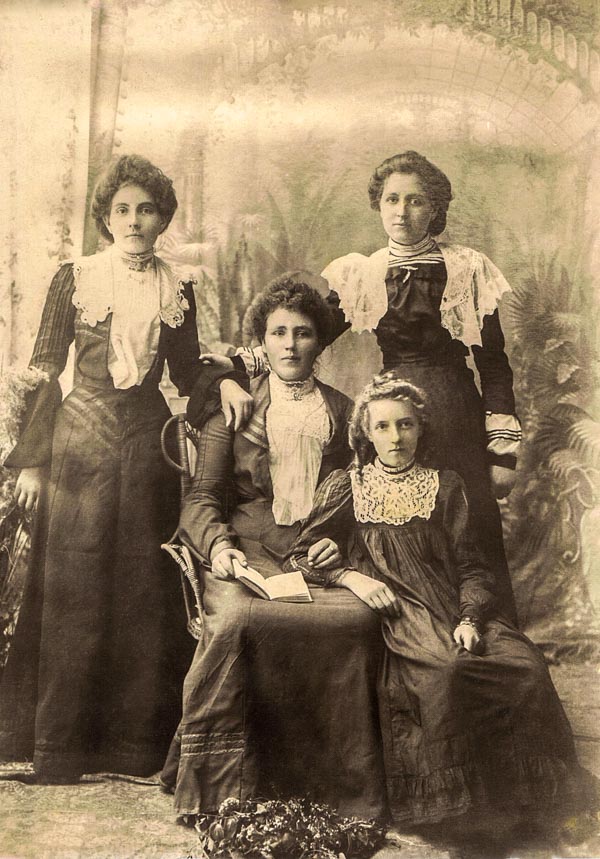
The following photo has been taken a few years latter as Emma, the youngest in the family now looks like a teenager. Probably a year or two before Lillian’s marriage. (Lillian, back left, Ann on right, Kate, sitting with book, Emma at her side)
According to Thomas and Lillian’s son Robert, Lillian used to work at Hills Coffee Palace in Tallangatta, and possibly “popped the question” there.
Another son, George recounts that Thomas was working at the Sandy Creek Gold Fields when he met Lillian. The Sandy Creek goldfields are about 3-4 kilometres out of Tallangatta, where many alluvial gold claims were being worked.
What was a Coffee Palace ? Was Lillian serving Lattes and macchiatos ?
Probably the best description of a Coffee Palace is, “A pub with no beer”.
Through the latter half of the 19th Century and into the early part of the 20th Century there was a strong Temperance movement in Australia.
In the second half of the 18th Century until the Depression of 1891-92, immigration was extremely high from Britain for those still seeking to make their fortune on the Goldfields, and the more wealthy gentry who were keen to invest in the booming economy.
Accomodation was in high demand particularly in the major ports of Melbourne and Sydney.
The so called “Coffee Palace” was developed to meet this accomodation demand, without the temptation of Alcohol.
The term “Coffee Palace” came from England where such establishments had been common for some centuries. They provided a place where people could congregate and socialise without getting drunk. The only alternative drinks were Tea, which was highly taxed and very expensive, and the local water which at those times meant you risked sickness or death from any number of water borne diseases. Coffee was relatively cheap and used boiled water, so this minimised the chance of getting sick.
Most major towns had a “Coffee Palace” about the time Lillian and Thomas got married. There were Coffee Palaces in Corryong, Tallangatta, Wodonga and Albury. In the early part of the 20th Century, the term “Coffee Palace” fell out of use, and these establishments became known as “Motels” or “Guest Houses”.
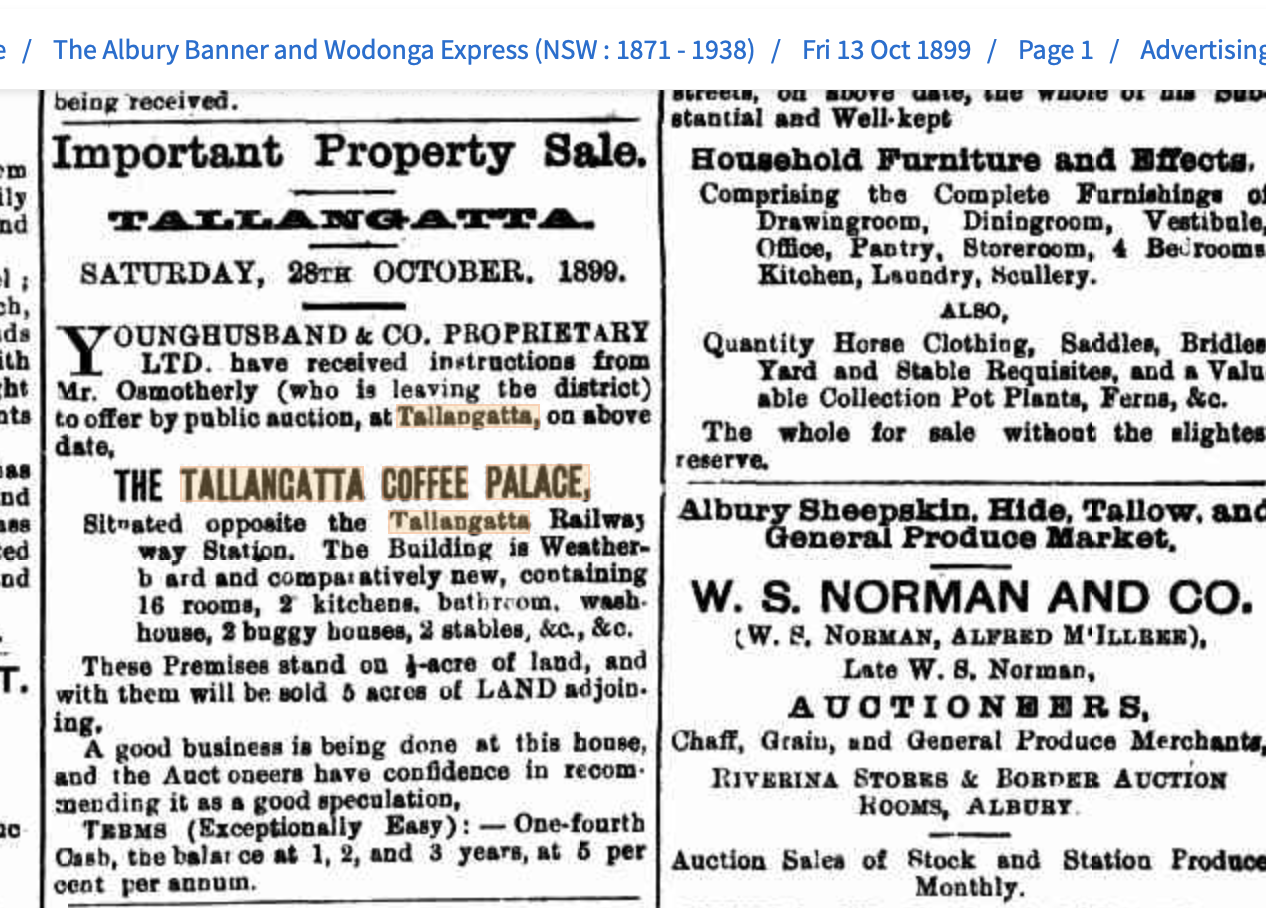
About the time Lillian worked at the Tallangatta Coffee Palace it was quite a large establishment. A few years before the Wedding in 1899, the Palace was put up for sale; it had 16 rooms, 2 kitchens, bathroom, 2 buggy houses and 2 stables.
The Big Day
In the lead up to the Wedding Day, it is understood that Lillian’s dress was prepared by Catholic Nuns in Albury, where she also received instructions in the Catholic Religion.
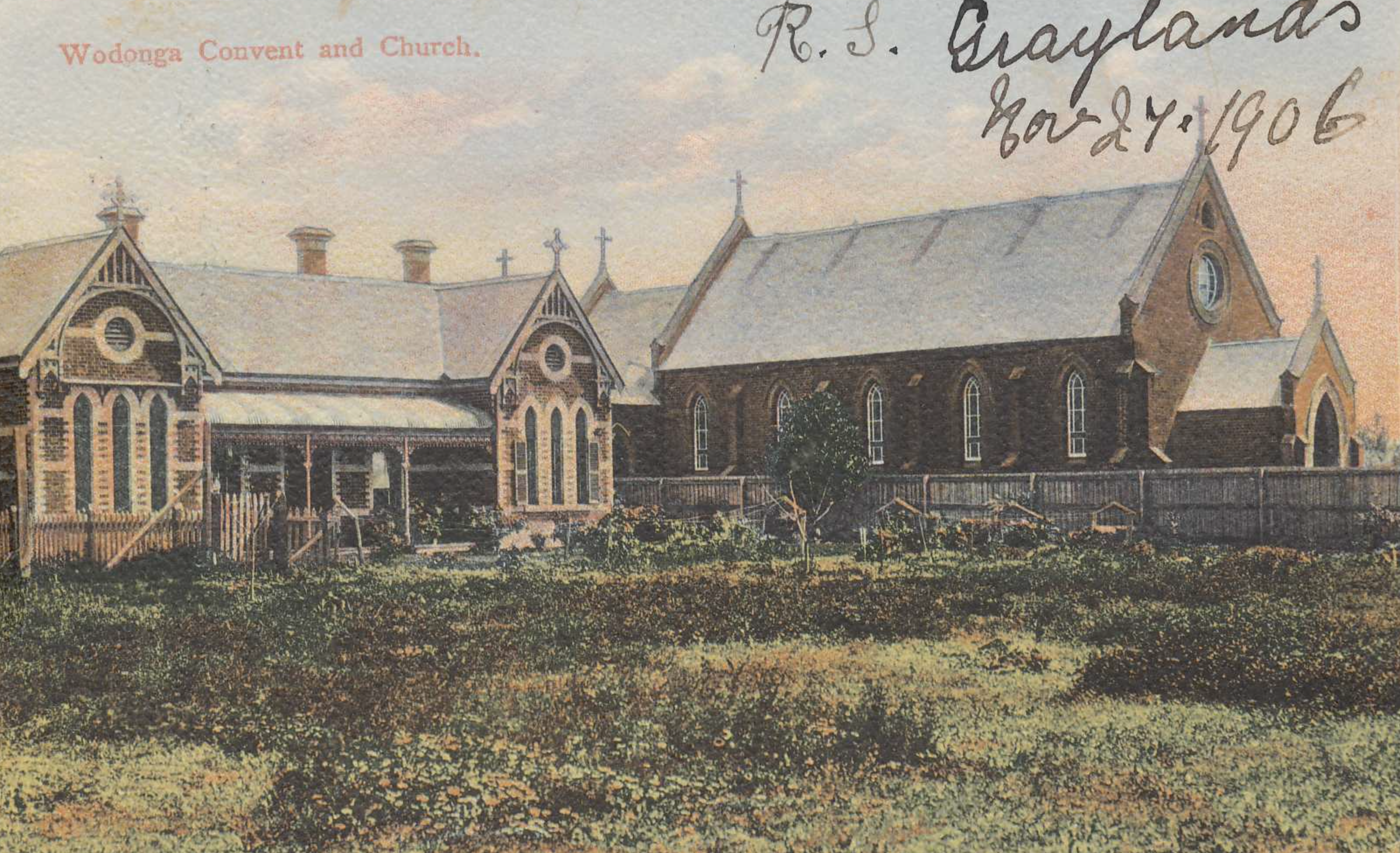
It is perhaps more likely that the Catholic Nuns were living in the Convent which was adjacent to the Church where she was to marry, St Augustine’s Church, Wodonga.
St Augustine Church and Convent 1909
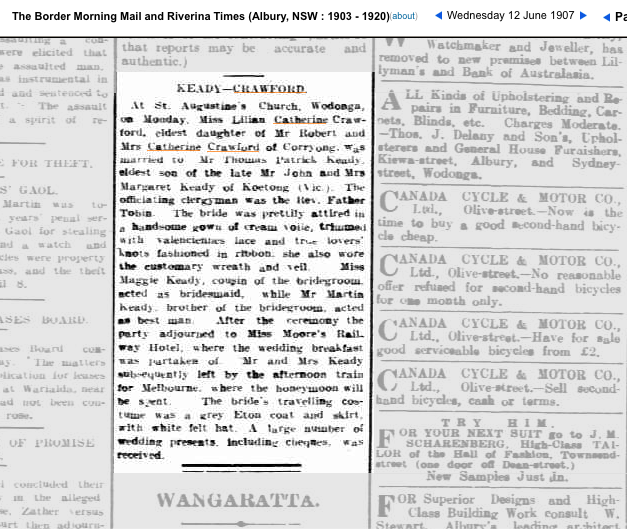
The Wedding and Reception certainly seemed to have been a low key affair. The Wedding was celebrated at St Augustine’s church on a Monday morning, 7 June 1907. After the Wedding Ceremony the Wedding Party moved down High Street a short distance, to Miss Moore’s Railway Hotel where a wedding breakfast was partaken.
Lillian and Thomas then caught the afternoon train to Melbourne for their honeymoon.
(The Railway Hotel was burnt to the ground a couple of years latter and replaced by a substantial brick built hotel, which after going through many owners and facelifts was demolished in 2020. Miss Moore sold up in 1909, and moved to take up a licence for a Hotel in Cootamundra.)
The best man was Martin Keady, Thomas’s younger brother and Maggie Keady (Margaret Teresa Keady), Thomas’s cousin acted as Bridesmaid. There is no mention of other family members in an article published by “The Border Morning Mail and Riverina Times on Wednesday, 12 June, 1907. Typically such newspaper reports of weddings would include a long list of attendees and describe the gifts each had given to the bride and groom.
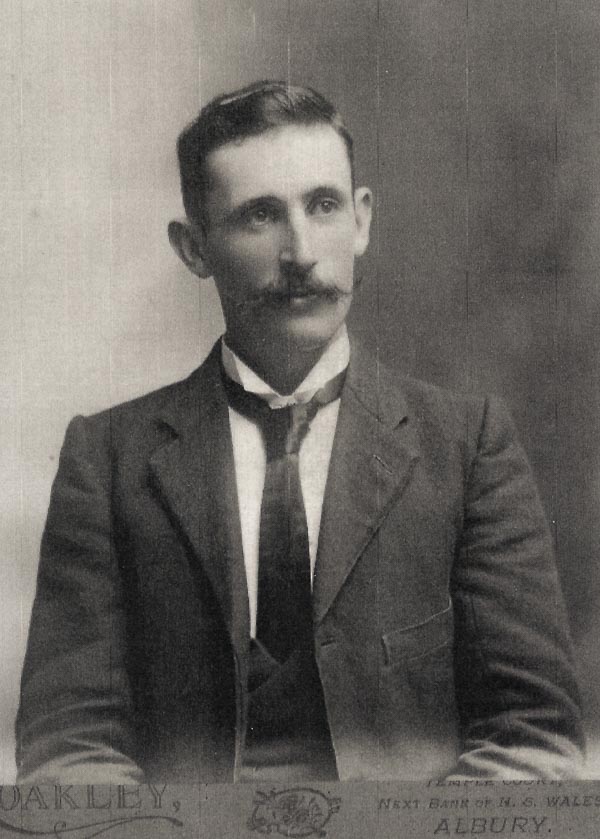
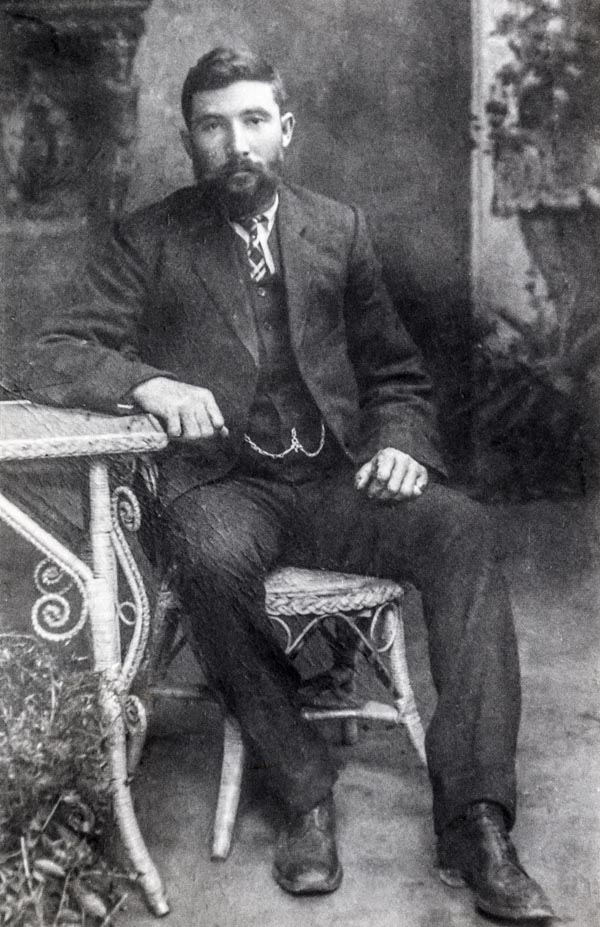
The Best Man, Martin Keady
Martin Keady 1880 – 1952
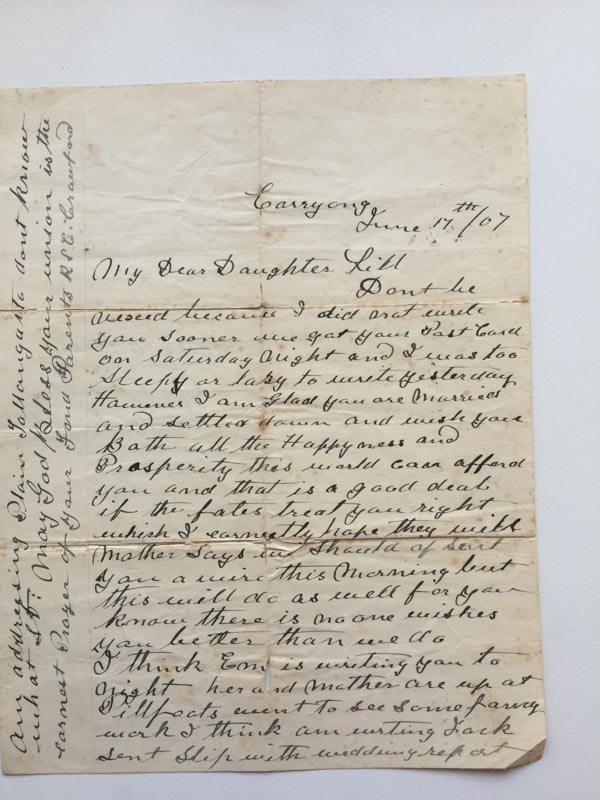
The family “story” is that Lillian’s parents were not at the Wedding and the following letter from her father seems to confirm that story. An attempt has been made below the letter to transcribe the content. Punctuation was clearly not a strong skill for the writer, Lillian’s father Robert. He hasn’t done a bad job at all, considering he had no formal schooling.
While Lillian’s parents weren’t actually at the Wedding, this seems to indicate the strong feelings they had for her.
Corryong
June 17th/07
My Dear Daughter Lill
Don’t be … because I did not write you sooner we got your Post Card on Saturday night and I was too sleepy or lazy to write yesterday.
However I am glad you are married and settled down and wish you Both all the Happiness and Prosperity this world can afford you and that is a good deal if the fates treat you right which I earnestly hope they will
Mother says we should have sent you a wire this Morning but this will do as well for you know there is no one wishes you better than we do
I think Ann is writing you to night her and mother are up at ….pots(?) went to see some fancy work I think am writing Jack
Sent Slip with wedding report.
Writing on side.
Am addressing Plain Tallangatta don’t know such at ST: May God Bless your union is the earnest Prayer your Fond Parents R & C Crawford.
Our Grandparents, Thomas Patrick KEADY (1874-1946) and Lillian Catherine CRAWFORD (1881-1962) were married in Wodonga and moved to the new Coalfields at the Powlett River Coalfields in 1909.
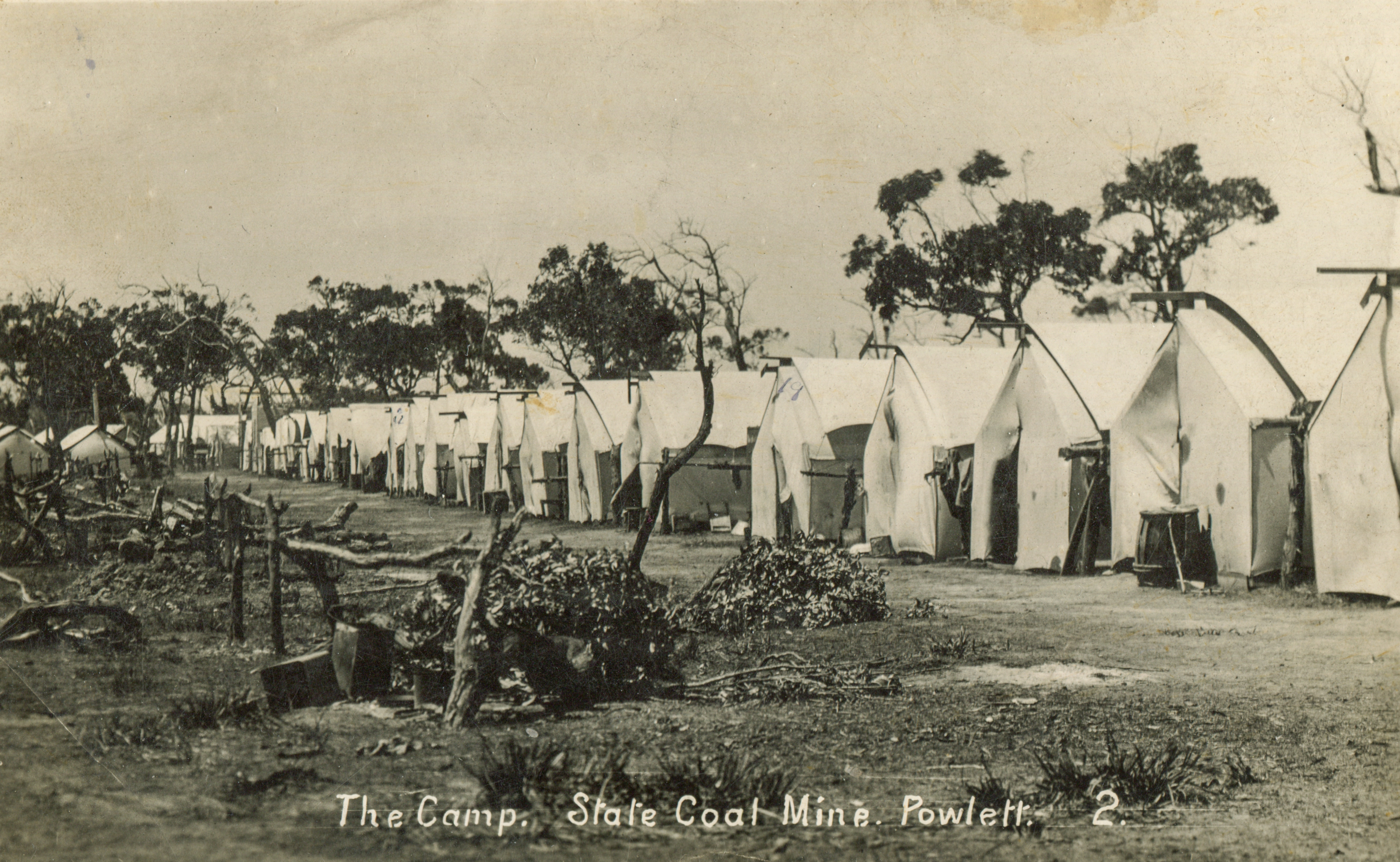
Tent City at Powlett River Coalfields (Wonthaggi)
Thomas and Lillian married on the 10 June 1907 at St Augustine’s Catholic Church, Wodonga. It is not exactly clear where they were living at the time, but we do know from Electoral rolls that Thomas had been living at Koetong with his family in 1903 and Lillian had been been living at Corryong, just down the road with her family. It was probably a fair bet that they met at one of the pubs or staging posts at Koetong because the only road from Corryong back to civilisation at Albury/Wodonga was the road through Koetong and Tallangatta heading west.
In the period after their marriage, Thomas and Lillian must have stayed in the local district because their first child, John Dennis Keady was born in Albury on 30 December, 1907. Their second and third children, Thomas Patrick KEADY and Frances Keady were both born at Powlett River. Thomas on 2 June, 1909 and Frances on 13 July 1910.
In the early years of the 1900s Victoria relied heavily on coal from the Hunter Valley in NSW to supply its railways. After a strike at the NSW coalfields, the Victorian Government was determined to secure its own supply, which led to the development of the State Coal Mine and establishment of the town of Wonthaggi on 1 August 1910. The area known as the Powlett River Coalfields had already been operating in a limited way for a number of years, but the coal had to be carted by bullock wagons to Inverloch and then shipped to Melbourne.
A tent city sprung up in no time to accomodate the workers who flocked from around Australia and overseas.
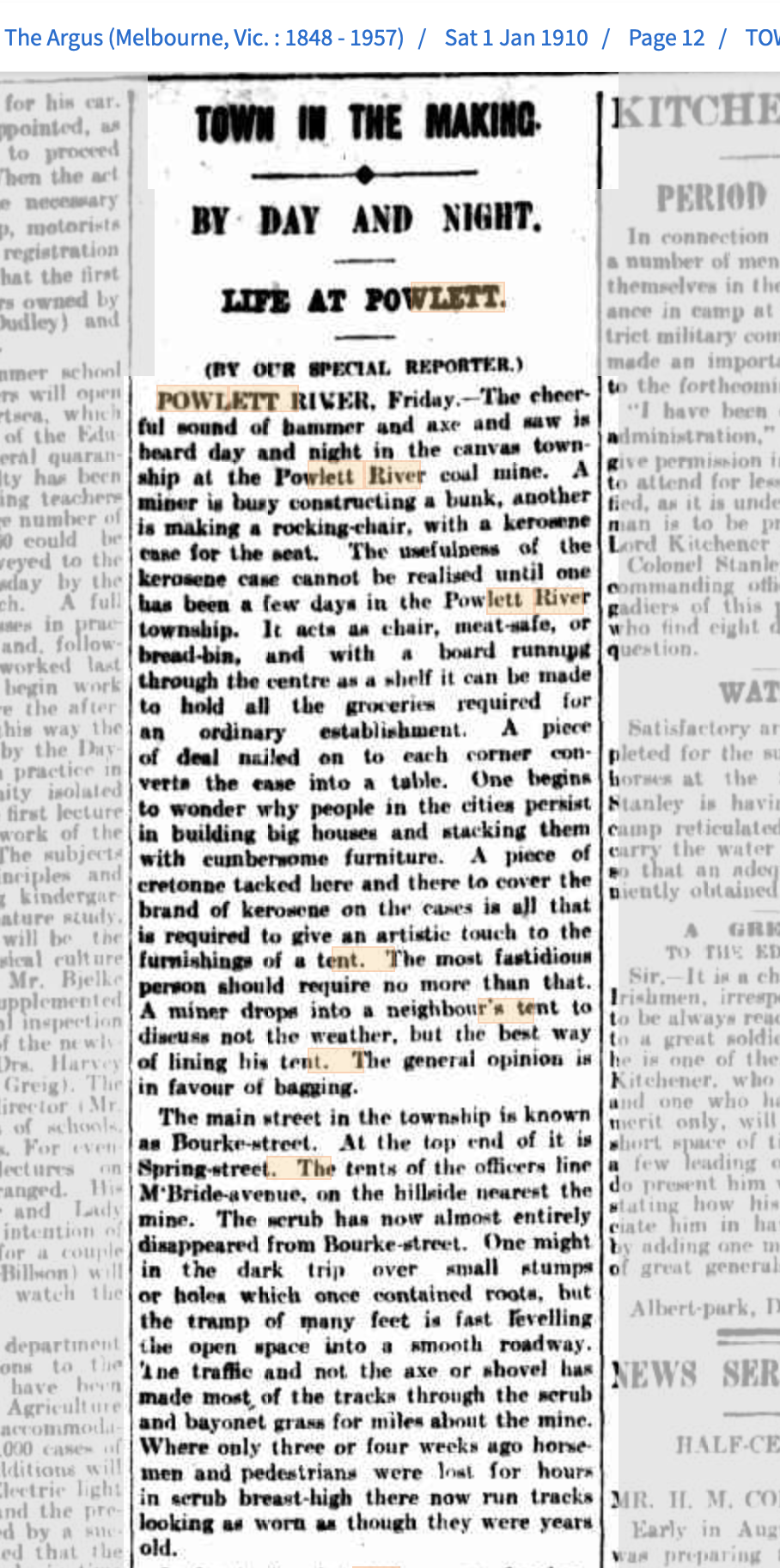
The following extract from an article published in “The Age” in January, 1910 provides a fantastic description of the tent city that Thomas and Lillian initially called home.
The following pictures come from original postcards sent by my wife’s relatives, who were also attracted to the prospect of good steady work.
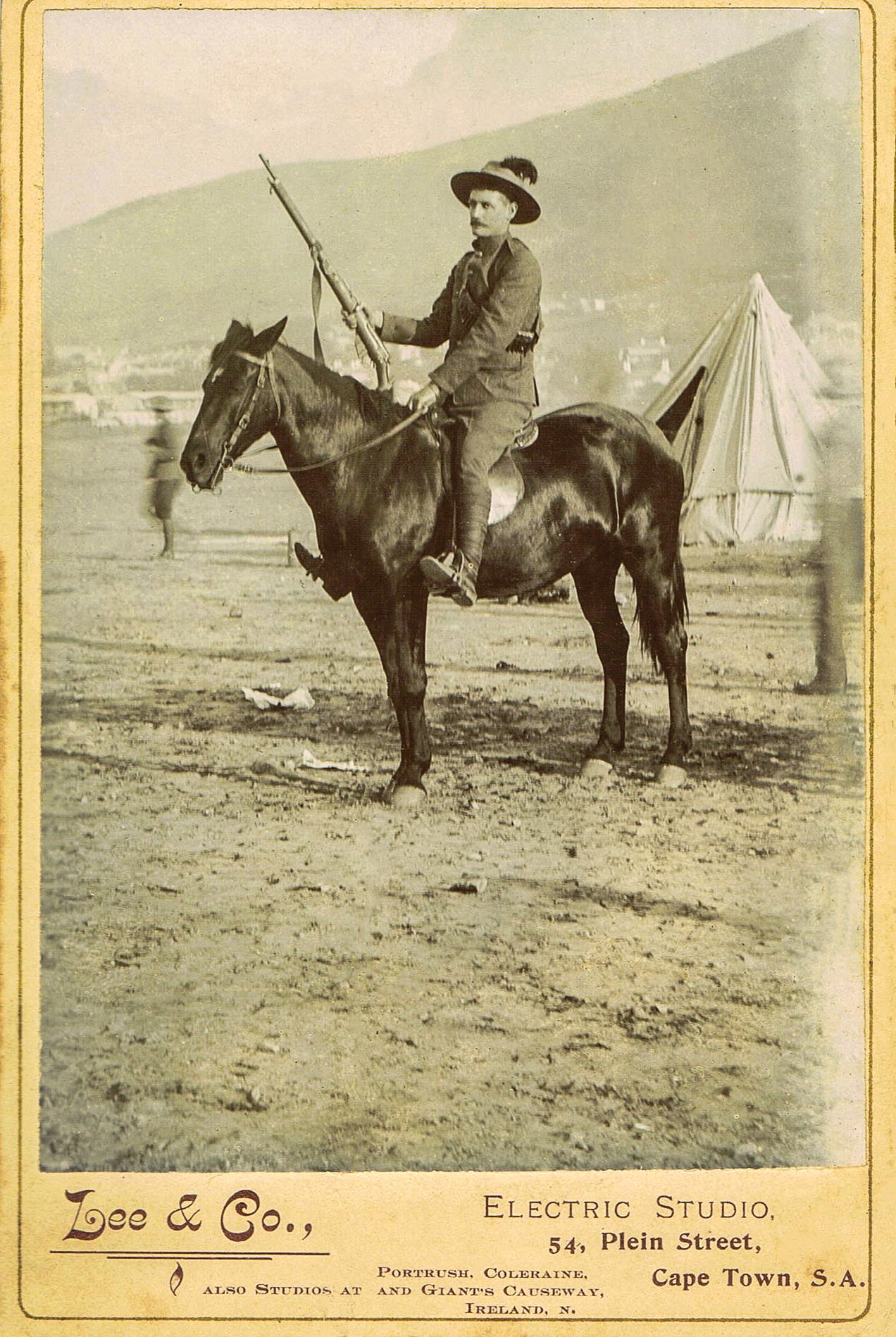
One of the Keady brothers in Boer War, South Africa, 1900-1902.
Two of the Keady Family joined the 3rd NSW Mounted Rifles and served in South Africa from May 1900 to May 1902. See earlier blog for a little more history. Click here.
The two adventurers were Michael Thomas Keady (1869-1940) and Patrick John Keady (1876-1951), sons of Patrick Keady (1837-1923).
Michael and Patrick were cousins of our grandfather, Thomas Patrick Keady (1874-1946). They would no doubt have shared many experiences as they grew up in Koetong through their teenage years and early 20s. The Koetong community about this time was quite small. On the 1903 electoral roll there were only 61 adults enrolled to vote, of whom 13 were from the Keady families.
The above photo has been discovered by Brian amongst the documents and photos collected by our grandmother, Lillian Keady (nee Crawford).
As is so often the case, there is no writing of any kind to help identify the person in the photo, however I think it is a fair bet to say it is either Patrick or Michael. You can see that the soldier on the horse is not an officer otherwise he’d be decked out in all his regalia. The photo is clearly a posed shot taken in the open by a professional photographer however this wasn’t enough to stop the blurred intruder who walks into the scene on the right hand side as the photo is being taken.
Unfortunately the only photos of Patrick and Michael are taken much latter in life when they are living in New Zealand and it is impossible to make any kind of comparison with the trooper in this photo.
In the absence of any other information coming to light I am quite happy to claim this trooper as one of the Keady family. Anyone seen any photos of similar vintage which might shed light on his identity ?
You might have noticed the roadblocks recently set up to limit travel between Victoria and New South Wales at Albury. The key checkpoint is located on Wodonga Place, just after the road crosses the Murray from Victoria. This is not the first time this location has been a critical checkpoint for travellers between New South Wales and Victoria.
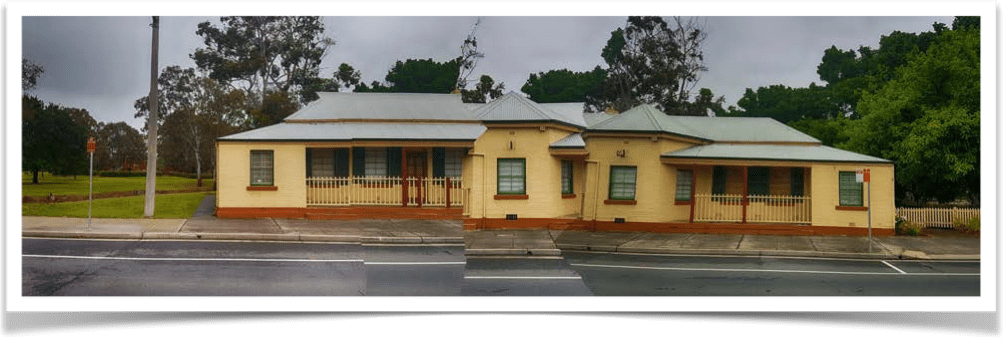
The checkpoint is right in front of the Albury Regional Museum which has close family links to the Keady family.
Albury Regional Museum, Wodonga Place, ALBURY
(Sourced: “Turk’s Head at the Union Bridge: From Licenced Hotel to Regional Museum) Dirk HR Spennemann. Institute for Land, Water and Society, Charles Sturt University)
Originally the Museum building was developed as a Hotel in the 1850s, went through many developments and incarnations until it finally closed as a Hotel in the 1920s. One of its many names was the Turks Head Hotel.
Our grandfather’s Uncle and Aunt, James Oddie and his wife Elizabeth (nee O’Leary) were the licensees of this hotel from December 1885 – June 1891.
Refresher on the Keady connections
Mathew John “Barney” O’Leary and his wife Johanna (nee Lombard) arrived at Port Phillip aboard the “Enmore” from Cork, Ireland on 4 October, 1841 about a month before John and Honora Keady arrived. They brought their daughters Johanna who was 5 years old and Betty who was only 8 months old.
By 1845 the O’Learys were living at Merri Creek, the same location that John and Honora Keady had established their family home. We know the O’Learys lived at Merri Creek because they received some notoriety because of an incident near the corner of Little Bourke Street and Swanston Street in April 1845 when taking their triplets to be baptised. Barney hit a tree stump which tossed the three babies and their nurses on the side of the road. (Very hard to imagine a tree stump in Little Bourke Street>)
One of the O’Leary girls, Margaret O’Leary married John Francis Keady (our Great Grandfather) on the 1 November, 1869 at St Patrick’s, Kilmore.
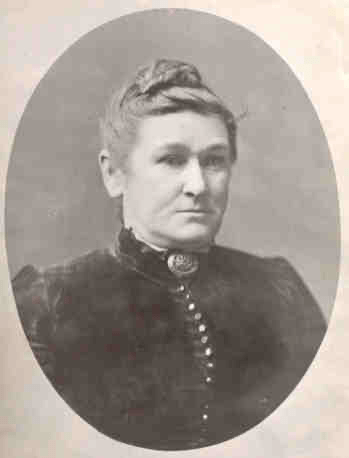
Margaret O’Leary
Margaret’s sister, Elizabeth Mary O’Leary married James Oddie, an Englishman from Lancashire in 1868 at Beechworth. James and Elizabeth went on to have eight children.
Elizabeth Mary O’Leary
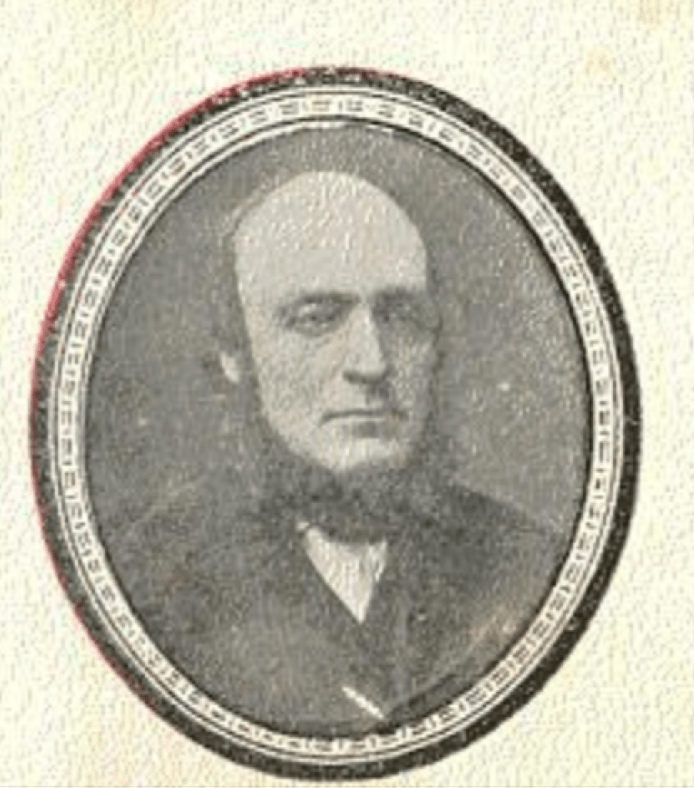
James Oddie
It would seem that the Oddie family moved from Beechworth to Albury in the mid 1880s. James was the licensee of the “Turks Head” Hotel from December 1885 to June 1891. At the time this was the main crossing point of the Murray River on the road from Melbourne to Sydney. The main clients were passing travellers who had to stop to pay a Bridge Toll when crossing the adjacent Union Bridge if heading south to Victoria, and those who had crossed the Bridge heading north had to stop for Customs Inspections.
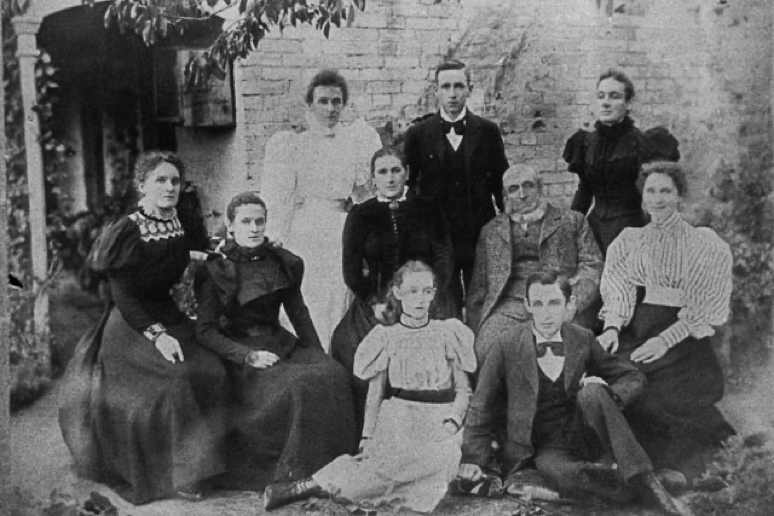
The Oddie Family
You’d think there would have been quite a reasonable amount of interaction between the Keady family living at the fairly remote Koetong township in Victoria, upstream on the Murray, and the Oddie family at Albury.
The Oddie family maintained a strong connection with Albury with some of the girls living out their lives in the town.
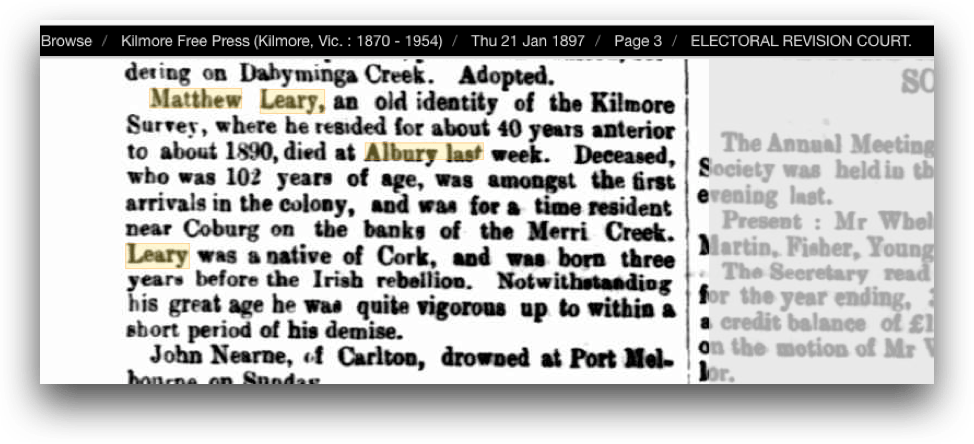
In addition, Margaret and Elizabeth’s father, Mathew “Barney” O’Leary finished his days in Albury, passing to the other side in 1897 at the ripe old age of 102.
Source: Trove
So if you see the roadblock on the Evening News, or you are travelling past going north or south once the restrictions ease, you will be able to look at the Museum and take pride that a distant relative used to pour beers there for weary travellers !





 Keady Family in Victoria