Ownership of Family Bible Confirmed

Excellent Photos come to Light confirming owner of Keady Family Bible.

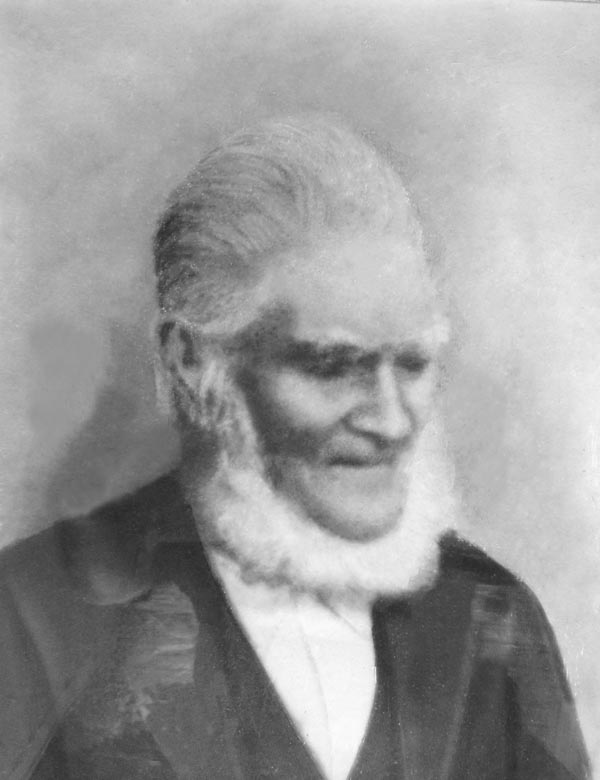
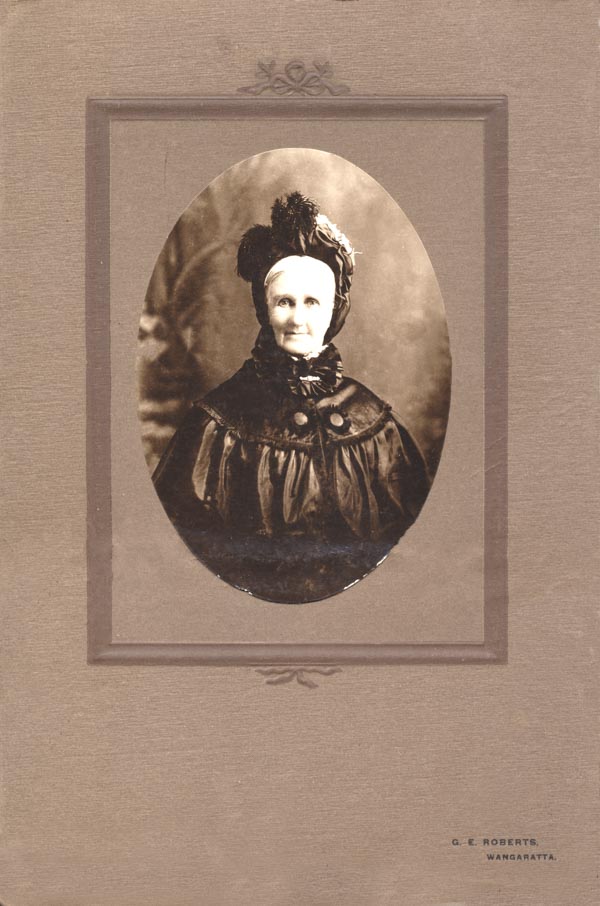
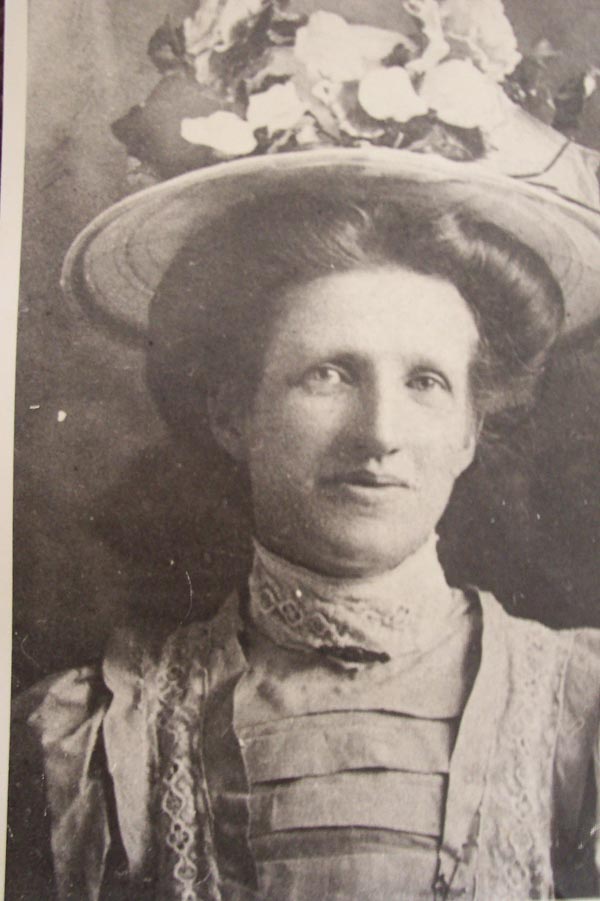
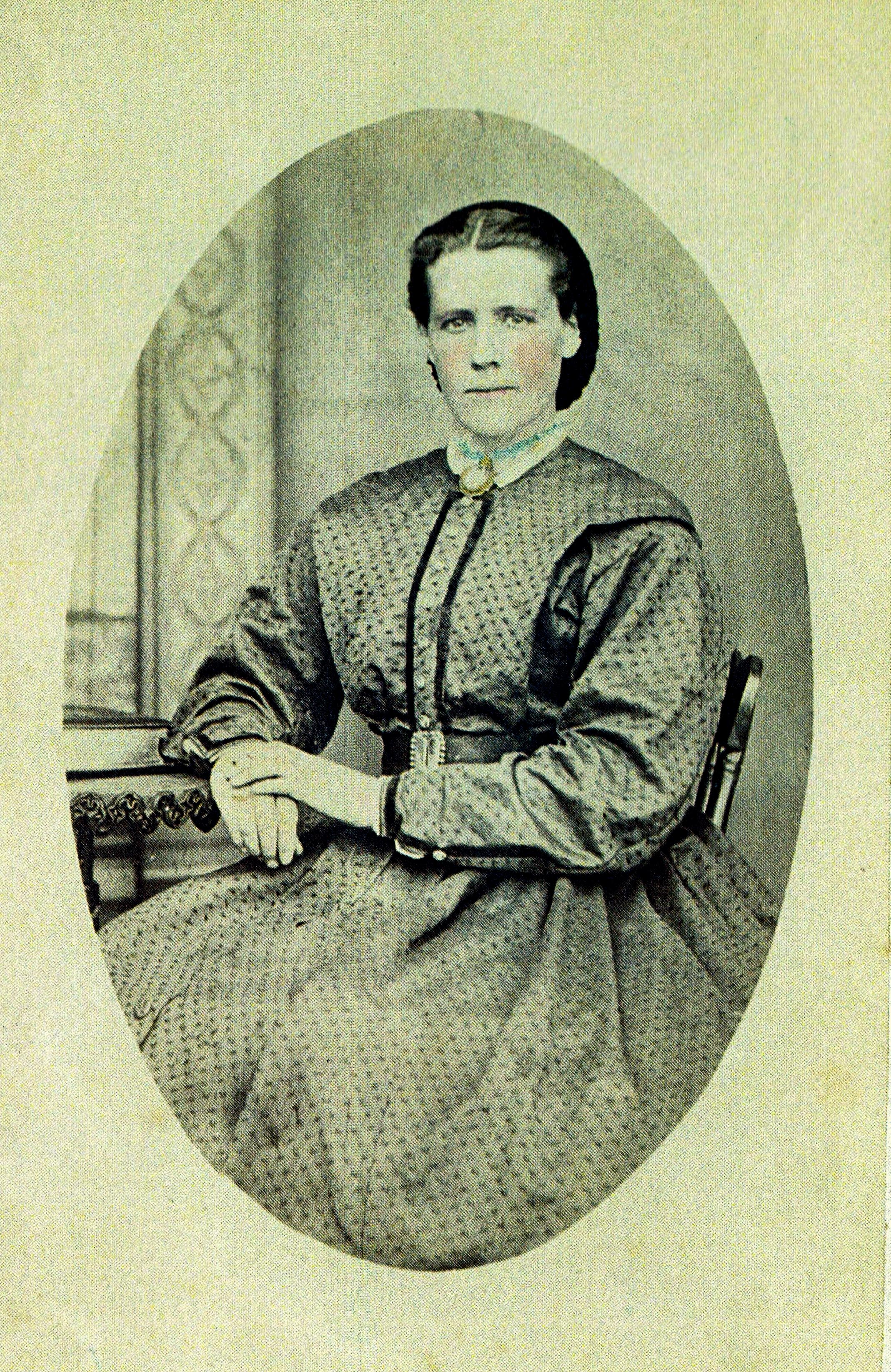
The following two photos confirm the identity of the couple, who’s photos appear in the Keady Family Bible.

While the only known Keady Family Bible almost certainly belonged to John Francis Keady (1840-1902), the two small photos(with many mould marks) tucked away in the back cover have no names or markings to help identify them.

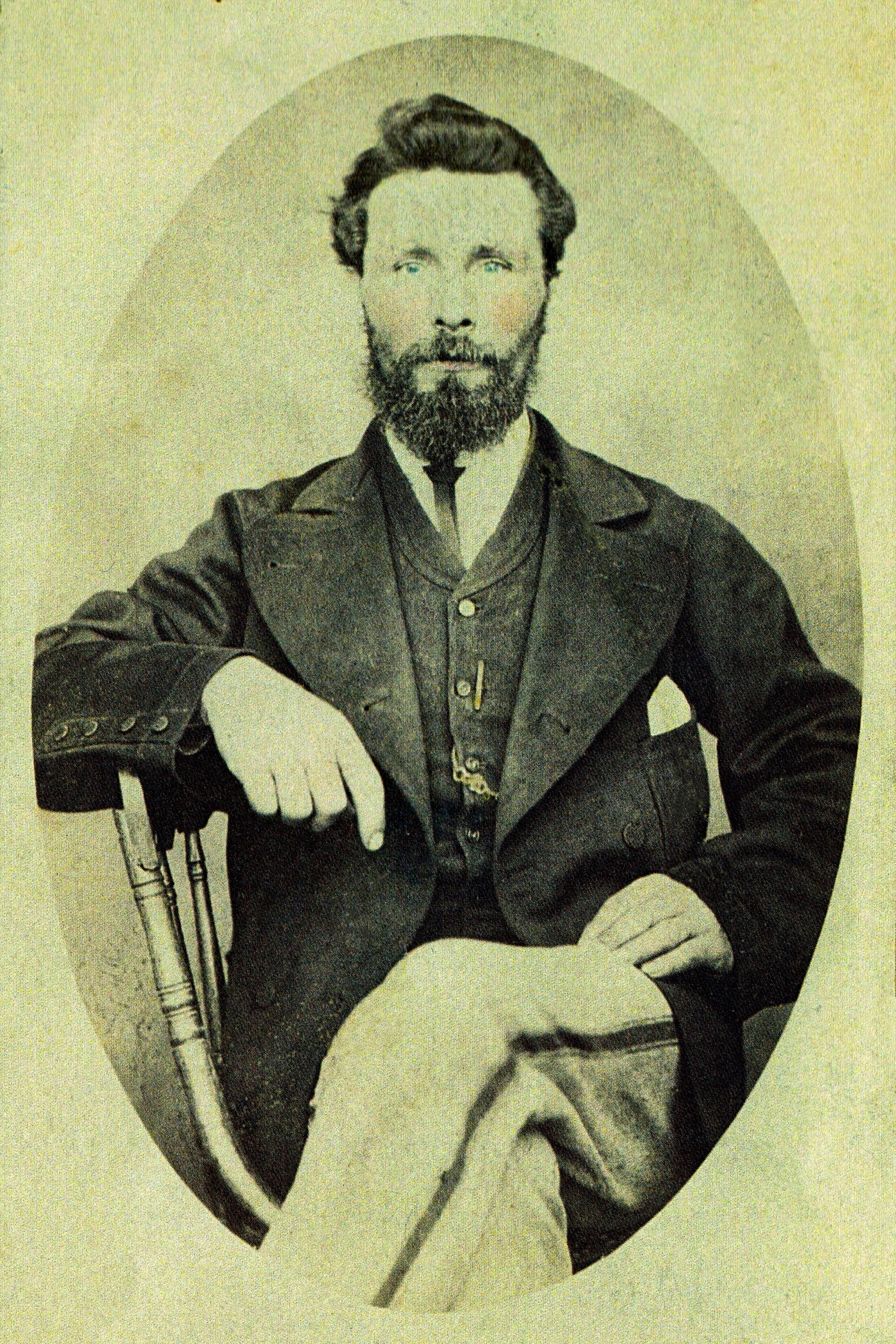
It has been assumed that they were John Francis Keady and his wife Margaret O’Leary (1835-1923).

Two photos have recently come to light through relatives of the Crawford Family which confirm the identify of the photos in the Bible.

What’s the connection you say ….

The 4th son of John and Margaret Keady, Thomas Patrick Keady (1874-1946) married Lilian Catherine Crawford.

MARGARET OLEArY

The detail in the photos is certainly much better than the mould stained photos which are in the Bible.

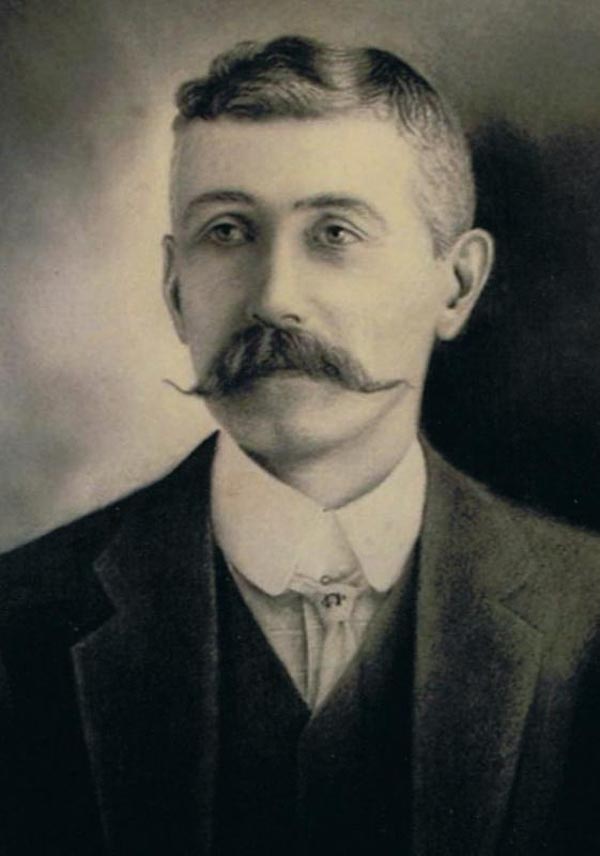
John Francis Keady

If you look carefully at the photos you will notice the slightest sign of colour for various features in both Margaret and John’s Photos. This is typical of photos of the time, with the photographer enhancing the black and white using colour paints.

Margaret has a tinge of red on her cheeks, a turquoise necklace and the gold on her broach and wedding ring have been painted. Likewise the cheeks on John have been given a bit of colour, his eyes painted blue and the gold chain and broach on his vest have been enhanced with some colour. (Not sure what the little vertical broach thing is, perhaps its just the end of his watch chain.)

Keady brothers join the 3rd NSW Mounted Rifles

There didn’t seem to be any involvement of the Keady family with the armed forces until the 1890s. With lingering troubles between the British establishment and the Irish settlers perhaps this is not surprising.

The Keady family were strong supporters of the Irish Republican movement, with their names appearing quite often in the published list of contributors to various organisations supporting Irish independence back “home”.

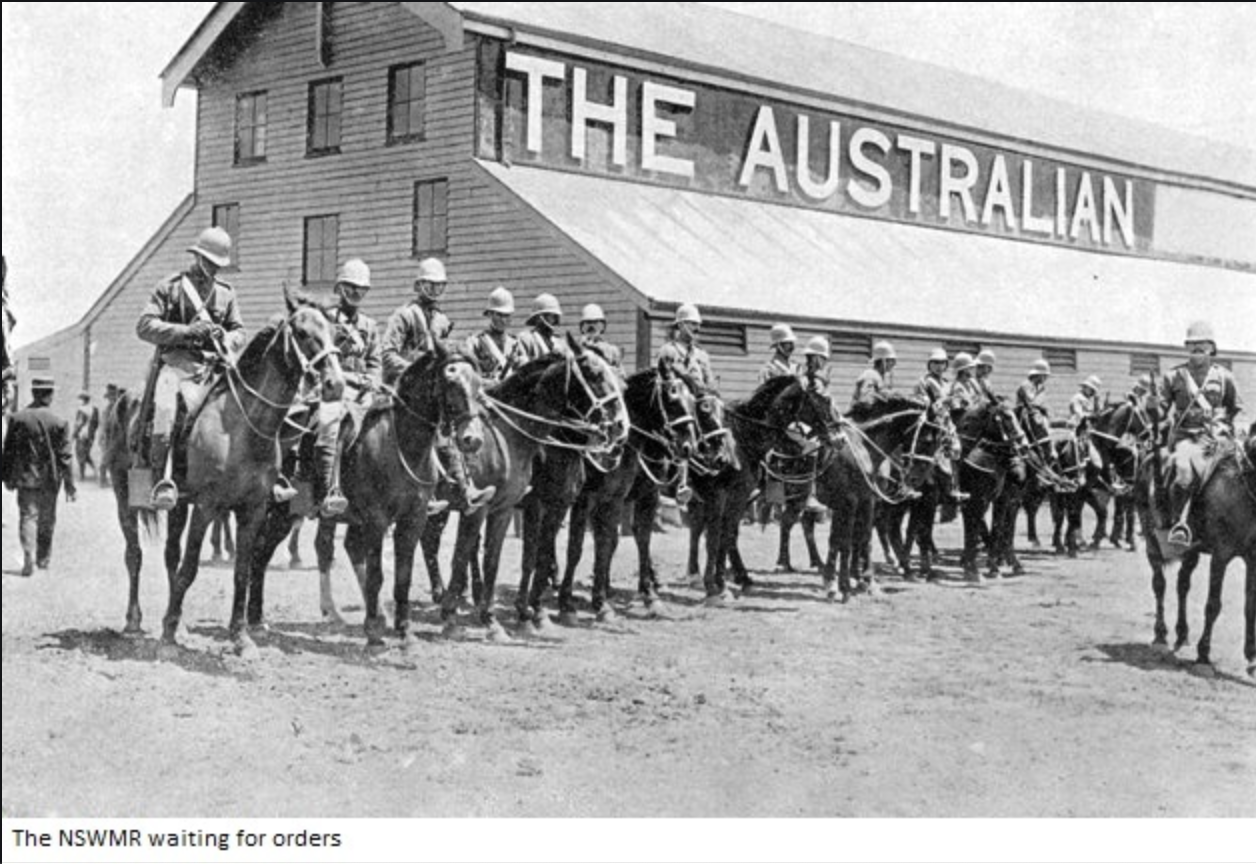
Two sons of Patrick Keady (1837-1923) , Michael Thomas Keady (1869-1940) and Patrick John KEADY (1876-1951) joined the 3rd New South Wales Mounted Rifles and served in the Boer War in the period May 1900 to May 1902.

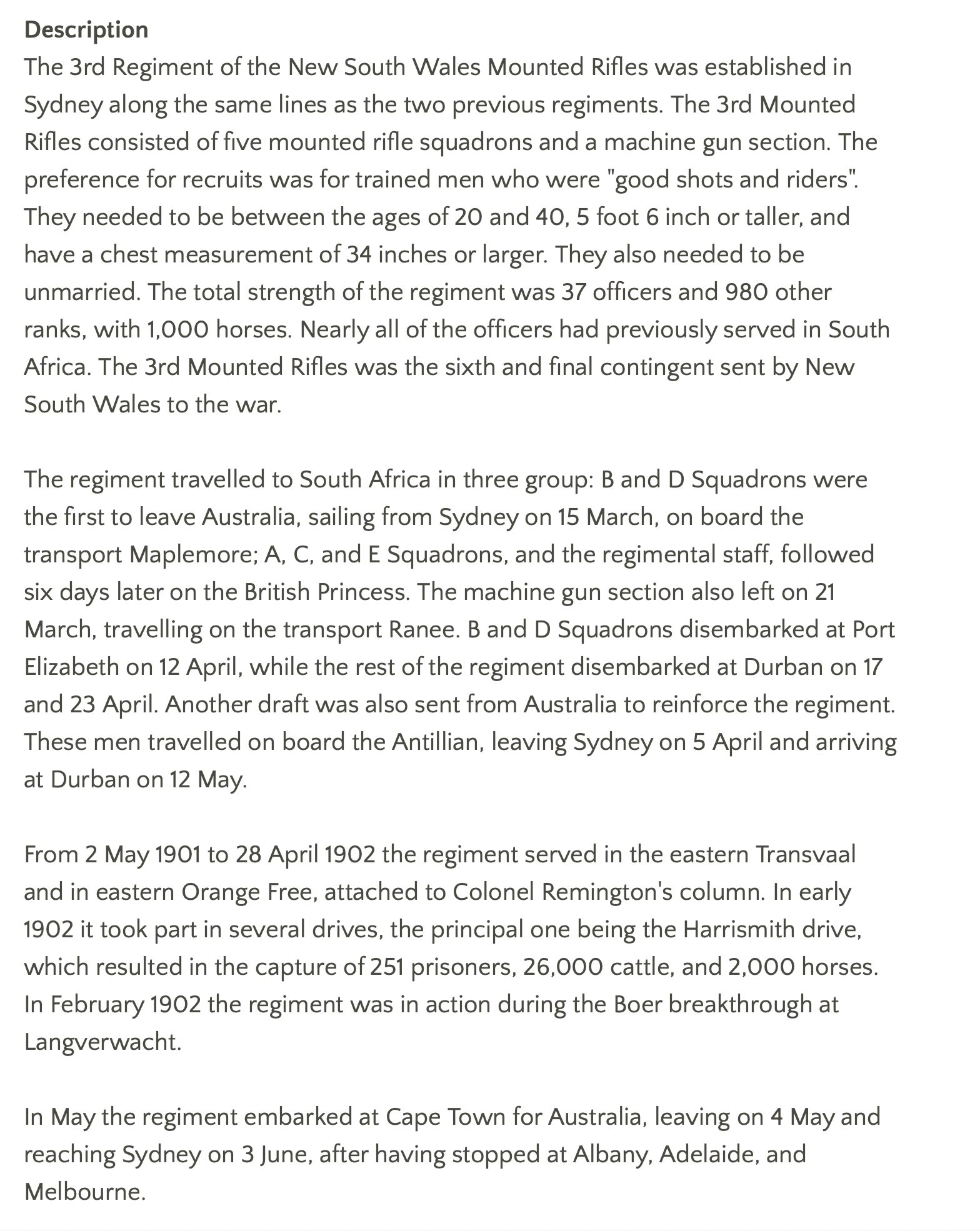
The brief history below for the 3rd NSW Mounted Rifles, sourced from The Australian War Memorial provides some background to the formation of the Corp and their role in the Boer War.

Michael and Patrick were living in pretty remote circumstances at Koetong about the time they enlisted and would no doubt have met the criteria of being “good shots and riders”.

Source: The Australian Boer War Memorial

The brothers seemed to have survived their expedition but when they returned to Australia they would have found economic conditions very harsh, so according to one of their descendants both headed off to New Zealand looking for a brighter future. They both eventually married and lived out their lives in New Zealand.

Micheal Keady – future life

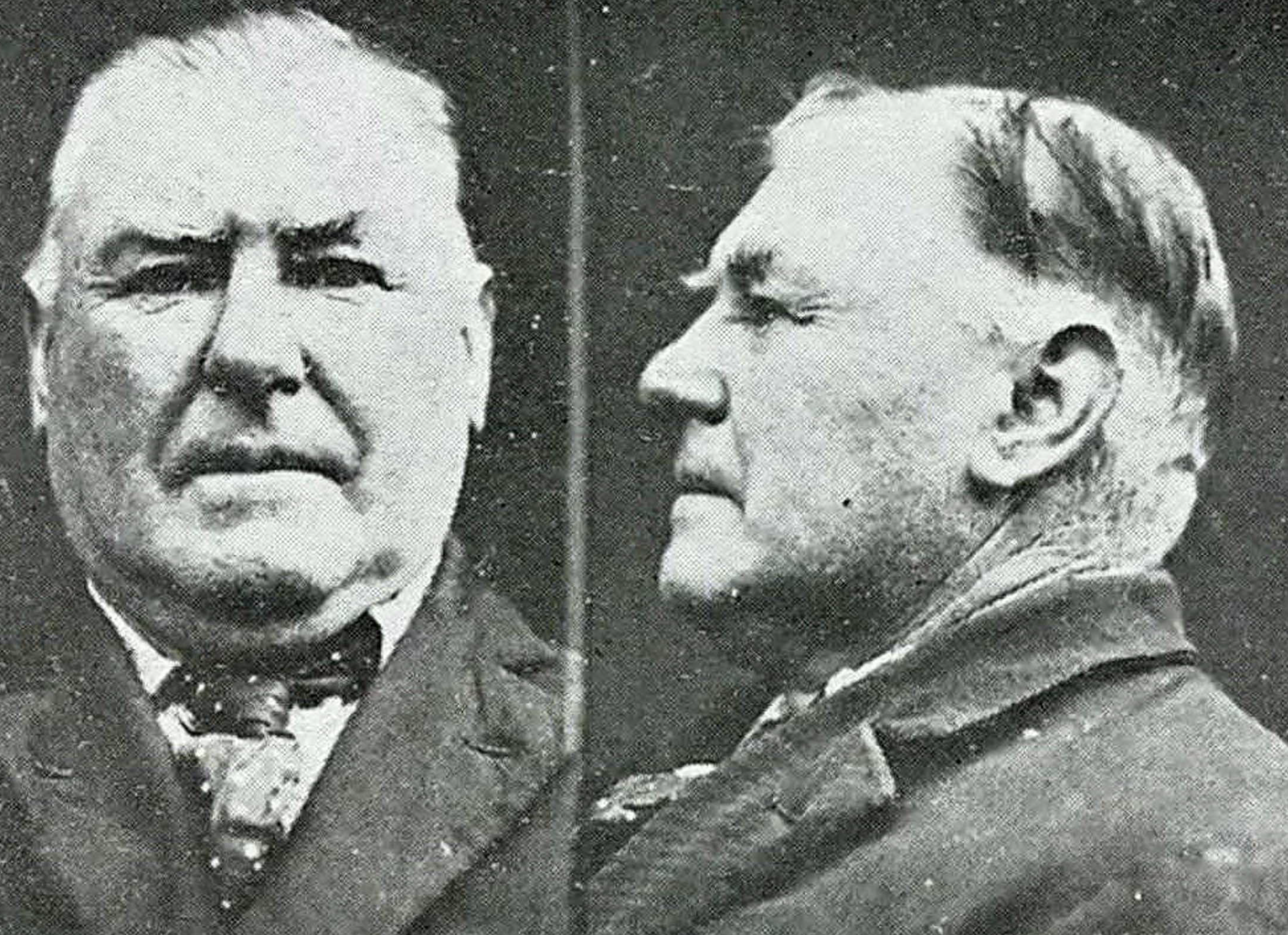
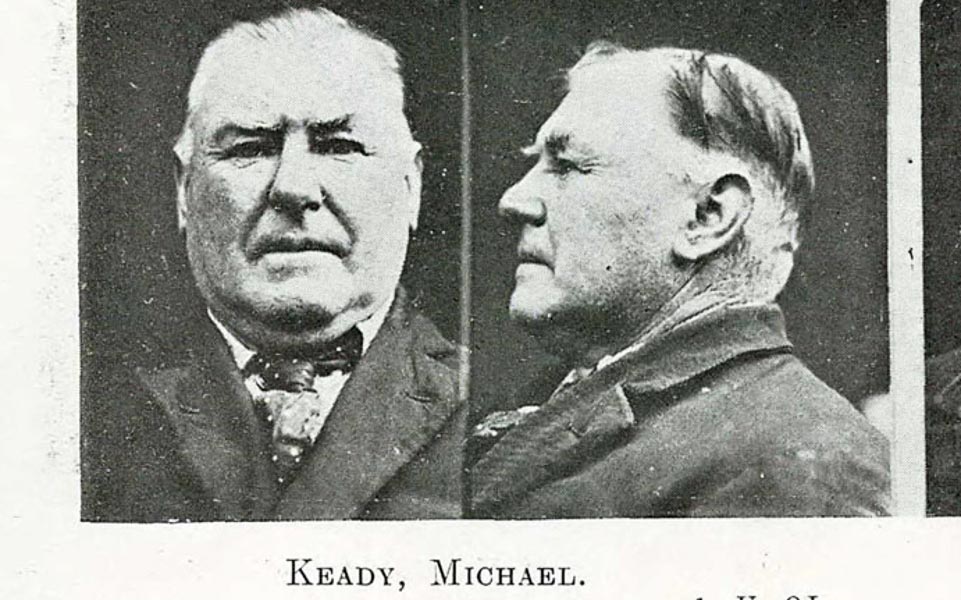
Micheal took to the family tradition of running pubs and went on to manage a number of Hotels in the Auckland area. The only photo of Michael which can be found is a Police mug shot from 1926 when he was in his mid 50s. Micheal was trying to improve his profit margins and was found in possession of certain alcohol which had mysteriously disappeared from a warehouse. He received a hefty fine and 3 months in jail.

Michael Keady 1936. Source: New Zealand Police Gazette

Patrick Keady – future life

Patrick seems to have taken up sheep farming. Perhaps this was also a tough profession in New Zealand at the time because he enlisted in the army again, this time for New Zealand. Patrick enlisted in the Otago Mounted Rifles in August 1914 and after a long journey was stationed to Gallipoli where he suffered gunshot wounds to his left arm and left side on 6 August 1915. After medical treatment in Malta and England he was eventually repatriated to New Zealand in March 1916.

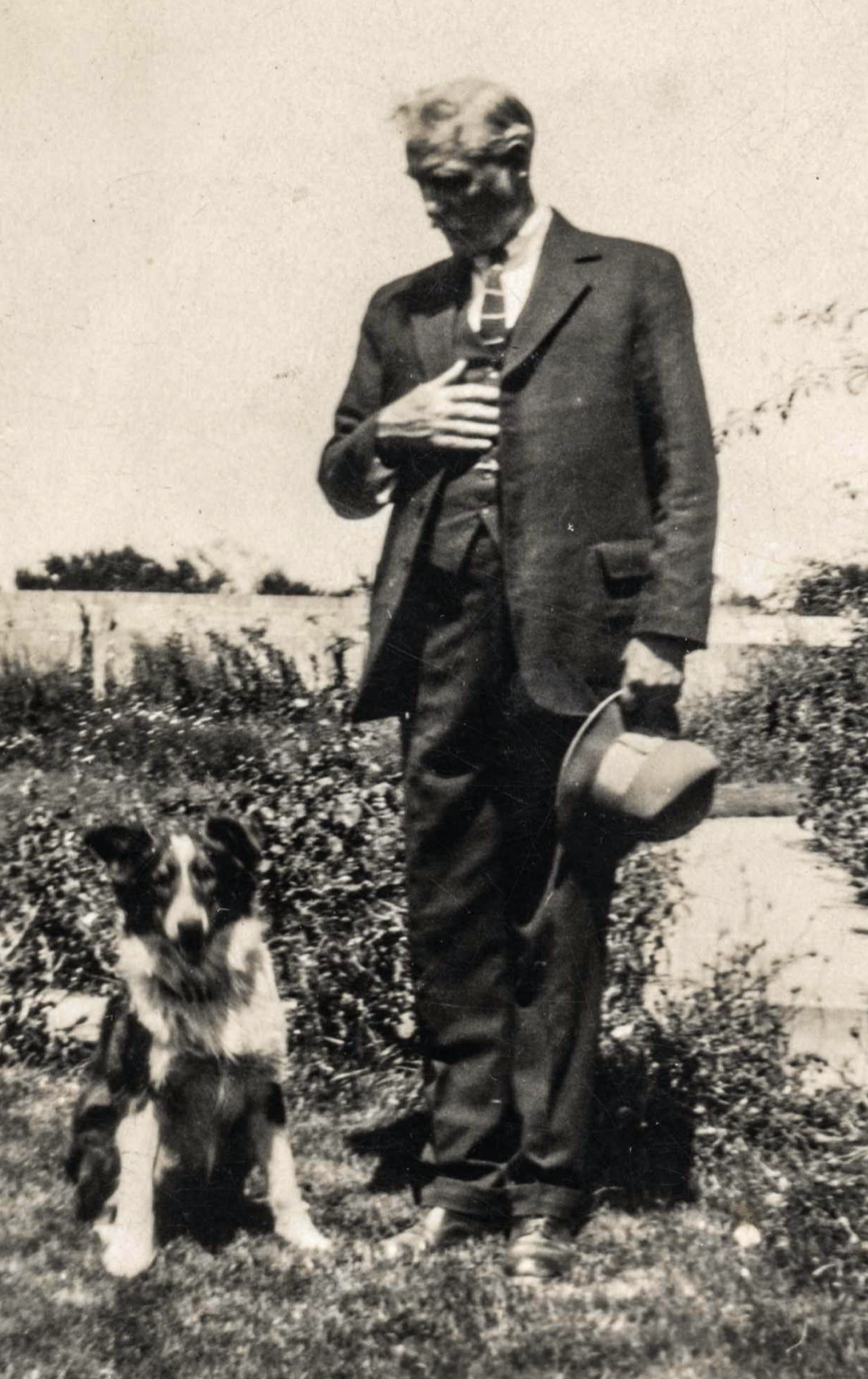
The rest of his life was spent around Orepuki and Tuatapere just west of Invercargill in the extreme south of New Zealand. The only photo of Patrick with the border collie below, suggests he lived his life out on the land.

First Keady born in Australia, James Henry Keady (Part 1)

James Henry KEADY was the fifth child of John and Honora Keady, the first to be born in Australia.

James’ Baptism which took place in Melbourne on 16 January 1843 indicates that James was born 4 days before on 12 January. The witnesses/godparents were Darby Carty and Sarah Walters. Darby was possibly a close friend of the family or a relative as he had travelled to Melbourne on the same ship, the Frances, as John and Hanora in November 1941. (Second entry from bottom in Baptism record. John’s surname, Keady, spelt Cady.)

Background: Civil registration of Birth, Deaths and Marriages did not commence in Victoria until 1853. At the time James was born in 1843 Port Phillip was part of the Colony of New South Wales. Victoria was not proclaimed as a seperate Colony until 1851.

No records can be found of his early life but presumably he grew up on the banks of the Merri Creek, Pentridge (now Coburg).

In his early years the family home must have resembled a creche, and at times been a very sad place. Mary the twin of John Francis Keady had died in 1842 shortly after the family arrived in Melbourne. In quick succession four more children were born after James. First Michael who was born in 1844, but died only 9 months old in 1845, then William and Elizabeth in 1845 (possibly another set of twins) and lastly Catherine the youngest of the family in 1846.

James marries Margaret Rose McManus at Kilmore in 1874

James marries Margaret Rose McManus, described as a farmers daughter, on 8 September 1874 at St Patrick’s Church, Kilmore. James’ occupation on the marriage certificate at the time is given as Farmer and Winemaker.

Keeping up Family tradition – Hotelier at Murchison

For at least 3 years in the mid 1870s James is running a Hotel at Murchison, although he is not the owner.

It would seem that James has left his business at the pub by the late 1870s and is working on the land. At the Murchison Agricultural Show in 1878 James wins 2nd prize for both red and white colonial wine.

1880s – James and Rose establish a family

Life continues in the Murchison district and their family are born in the district. The children of Rose and James were”

  1. Hanorah, born 3 October 1880 in Murchison
  2. Annie, born 25 May 1882 in Murchison
  3. Leonard John (Leo) born 9 April 1884 at Murchison
  4. Margaret Frances born 1886 at Shepherds Flat
  5. Alberta Marie born 9 January 1889 in Shepparton

1890 Tragedy strikes the Family

Rose dies on 9 March 1890 in Mooroopna Hospital from Typhoid and Pneumonia, leaving James with 5 children to care for, including the infant Alberta who is barely 1 year old. Rose was only 42 years old at the time.

From records available for the children in their latter life, it would appear that four of the children, Hanora, Annie, Leo and Alberta were raised by Rose’s family, the McManus family. The fourth child Margaret Frances who was four years old at the time of her mother’s death was fostered by Daniel and Bridget Keady.

The relationship (if any) between James Henry KEADY and Daniel Keady still remains a mystery, but they were certainly close neighbours in the Murchison area. James Henry and Daniel had adjacent land holdings near the small settlement of Muddy Creek (now Moorilim).

Besides loosing his wife, James appears to have had some major financial setbacks at this time also, which might explain why he leaves the district and joins his two brothers Patrick and John Francis at Koetong.

Part 2 of James’s story will provide some detail of his land speculation activities and latter life at Koetong.
Precious Photos – Patrick and Mary Keady – Koetong

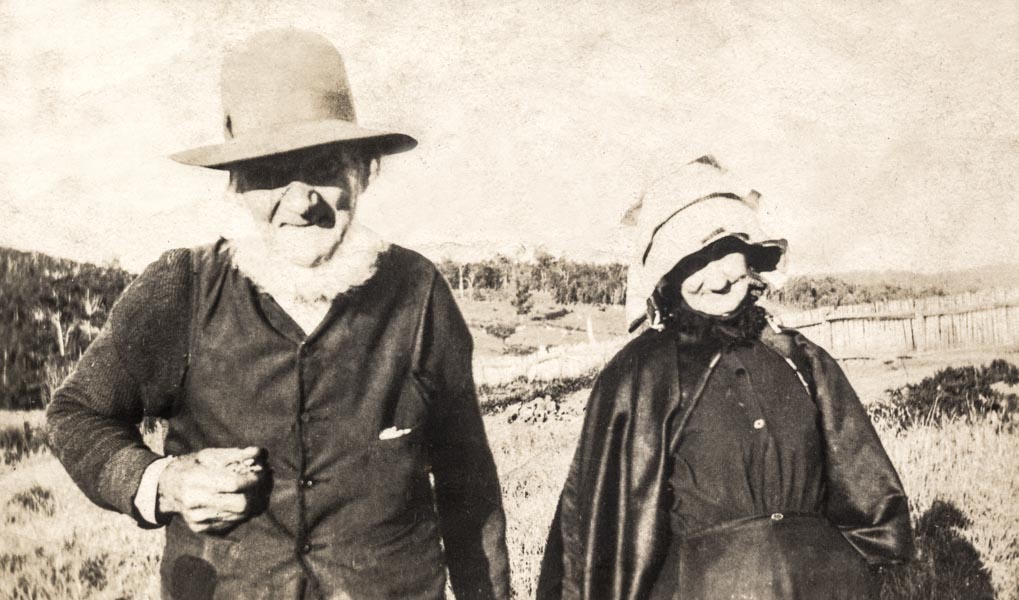
While family photos of the first generation Keady family are pretty scarce or at least cannot be found yet, there are a few which have been passed down through the generations. The following photos of Patrick Keady, his wife Mary Ann Quinlan and the Keady farm at Koetong have been provided by one of Patrick’s descendants.

The first two photos are large portraits of Patrick and Mary which hung on the wall of the farmhouse at Koetong. (The farmhouse with some additions is still standing at Koetong, although no longer in the family.)
The following photos were taken on the family farm. The first was possibly taken in the early 1920s and shows Patrick and Mary in the fields around the farmhouse. (This is an educated guess based on the appearance of Patrick and Mary.)

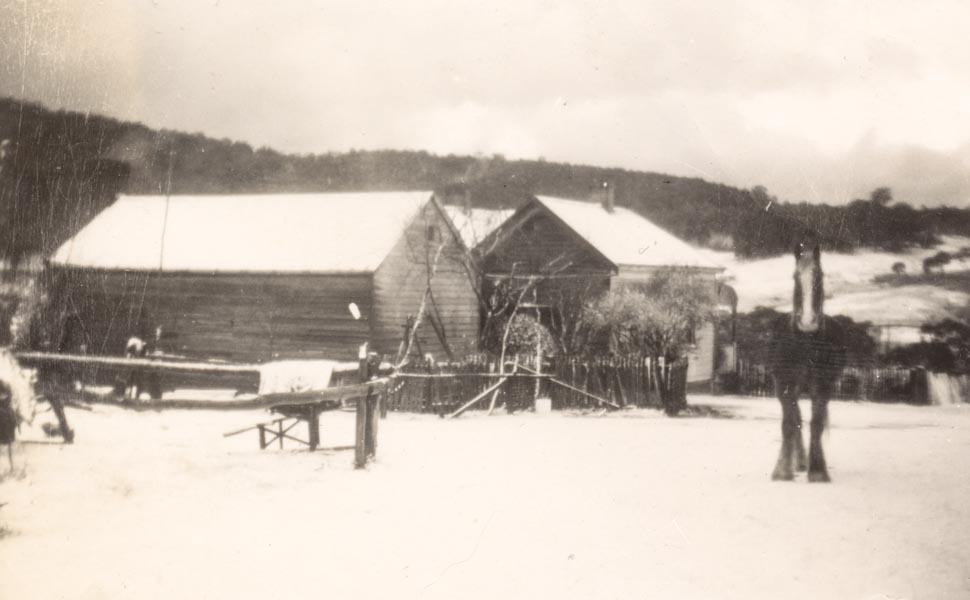
The second photo of the Keady farmhouse, with snow on the ground is thought to have been taken in the 1950s.

If you have any early photos tucked away, or have any thoughts on leads to follow up, don’t hesitate to get in touch.

John KEADY (1812-1884) Shady dealings with the authorities or just smart ?

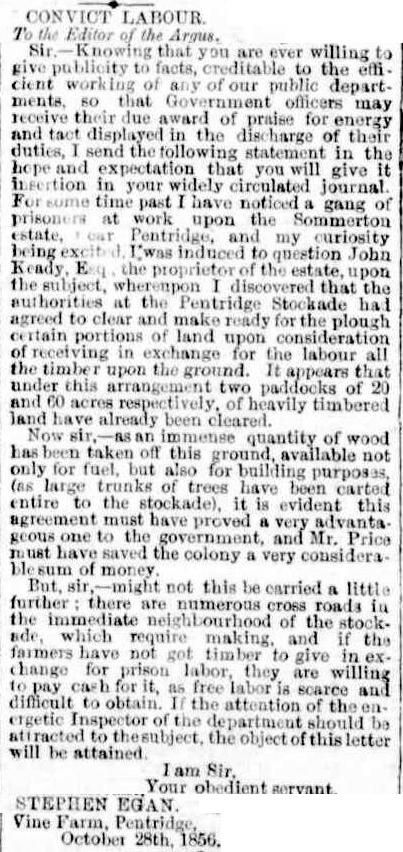
The “Letter to the Editor” below appeared in “The Argus” (The Age) on Friday, 31 October, 1856 from Mr Stephen Egan of Vine Farm, Pentridge (later to be renamed as present day Coburg).

Mr Egan was a neighbour of John KEADY with land holdings near the Pentridge Village, leading down to the Merri Creek. It is not clear if he was an immediate neighbour or just living in the vicinity.

Mr Egan’s letter needs to be considered in the context of life in the Port Phillip colony in the mid 1850s.

The Gold Rush is in full swing at this time, with labour in very scarce supply because everyone is heading off to the gold fields to make their fortune. Even ships arriving in Port Phillip to deposit the increasing number of immigrants have real problems leaving because the sailors who man the ships are jumping ship and heading to the Goldfields.

Crime is a real problem with the vast number of immigrants. There is a real need to expand the Pentridge Stockade (later to be Pentridge Prison) which was established in 1851 to house the criminals of the Colony. The Pentridge Stockade was undergoing a major expansion when Mr Egan wrote his letter.

In a nutshell, John KEADY has done a deal with the Pentridge Stockade Governor to use prisoners to clear his land and in return the Governor gets access to the felled trees to enable construction of his Stockade. The real advantage for John KEADY is the clearing of his land; 80 acres is mentioned in the article. Besides labour being in very short supply at the time, so also was good arable land close to Melbourne which could be used to grow crops to feed the ever expanding population. John Keady’s land would no doubt have increased in value substantially when it was cleared.

Stephen Egan seems to suggest that John Keady’s deal with the Governor is a bit shady and the labour of the prisoners would be better applied to building roads. Although, perhaps Mr Egan is just annoyed that he hasn’t had the chance to get in on the action and get access to this scare labour for himself.

Irrespective of Mr Egan’s motive for writing, the article gives a great insight into how John KEADY was able to develop some of his land holdings in the early Port Phillip colony.

Irish Families Stick Together

The Keady family no doubt formed close friendships with other Irish immigrants when they arrived at Port Phillip in November 1841. One family in particular, Mathew “Barney” and Johanna O’Leary formed a close relationship with John and Honora Keady.

Mathew John “Barney” O’Leary and his wife Johanna (nee Lombard) arrived at Port Phillip aboard the “Enmore” from Cork, Ireland on 4 October, 1841 about a month before John and Honora Keady arrived. They brought their daughters Johanna who was 5 years old and Betty who was only 8 months old.

The trip from Cork for the O’Learys and the other 96 sponsored immigrants took them just over 4 months. The shipping record notes that Barney and Johanna could not read or write and that Barney’s occupation was “Farm Servant”.

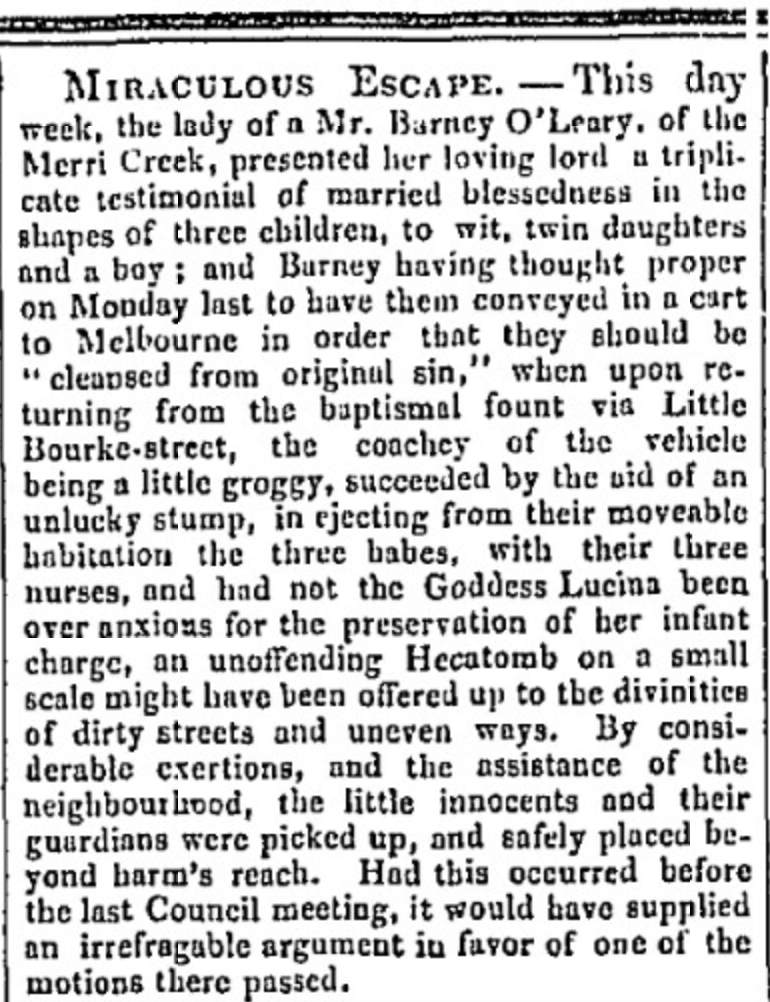
By 1845 the O’Learys were living at Merri Creek, the same location that John and Honora Keady had established a home for their family. We know the O’Learys lived at Merri Creek because they received some notoriety because of an incident near the corner of Little Bourke Street and Swanston Street in April 1845.

The article below from “The Port Phillip Herald” of 3 April 1845 gives a good explanation of the near tragic accident.

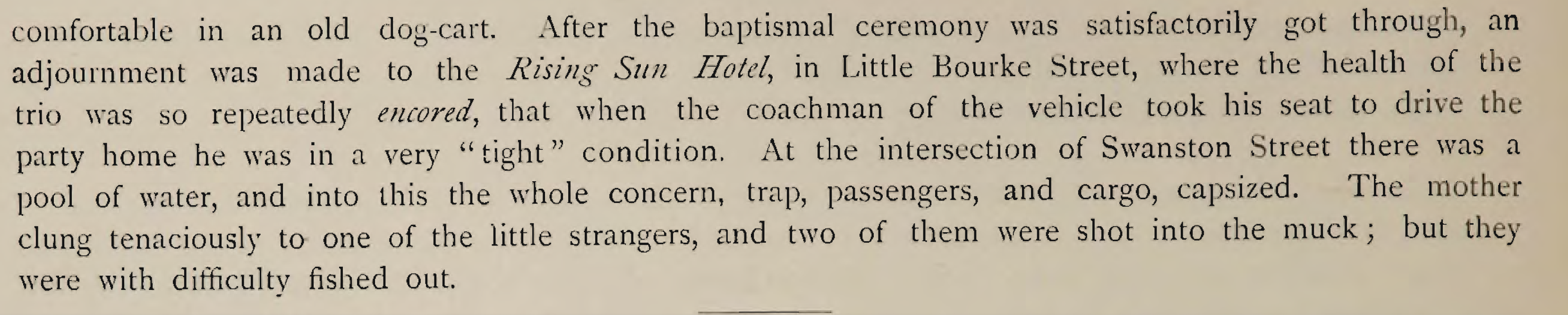
Also the following article from “ The chronicles of early Melbourne, 1835 to 1852: historical, anecdotal and personal/by “Garryoweb”” gives a slightly less artistic description of the incident. It is worth noting that it is reported that the triplets were only the 2nd set of triplets born in the colony.

The triplets were Ellen, Mary Anne and John. Baptism records show Barney and Johanna had two other children after they arrived in Australia, Catherine, 1843 and Mary in 1846.

Jumping forward 24 years and John Francis Keady (1840-1902 ) marries Margaret O’Leary at St Patrick’s, Kilmore on 1 November, 1869. Details on the Marriage Certificate means Margaret would have been born in 1835, and her place of birth was given as County Limerick, Ireland. This would suggest that the “Johanna” listed on the shipping record was indeed Margaret.

The following image is the only known photo of Margaret which was found in the family bible of John Francis Keady.

Elizabeth Keady (1845-1904)

Elizabeth Mary Josephine KEADY (1845-1904)

John and Honorah’s eighth child, Elizabeth was born at Merri Creek, Melbourne in 1845.

No information has been found on her early life.

Elizabeth was 29 years old when she married Michael Daniel Daly in 1874.

Elizabeth and Michael’s first child Catherine was born in Nagambie, 1876 and their second child Nora Teresa Daly was born in 1878.

Tough Times for Elizabeth

Michael Daly died relatively young at only 38 years old on the 14 March 1878 at Dookie. Elizabeth was left as a widow looking after a 2 year old (Catherine) and a newborn (Nora) or possibly she was still pregnant at the time of Michael’s death. The circumstances of Michael’s death are not known.

The probate papers for Michael Daly reveal that he was a storekeeper at the township of Dookie South (later called Cashel) which by 1902 was virtually deserted. When the railway was extended from Shepparton to an area about 3km north of Cashel in 1879, this spelt the end of Dookie South. The new township which sprung up around the station became the township of Dookie.

Elizabeth must have been left in dire straits because the probate papers show that Michael died with debts in the order of 2,000 pounds. Although he owned some houses and land in the Main Street of Dookie South (Cashel), he had a significant mortgage and huge debts associated with stock for his store. He even owed 100 pounds to Patrick Keady, presumably Elizabeth’s brother.

Perhaps Patrick knew of Elizabeth’s financial predicament because he renounced any claims and rescinded his duty to act as an Executor for Michael’s will.

Elizabeth marries John Doyle

Three years after Michael Daly’s death, Elizabeth married John Doyle in 1881 at the age of 36. Elizabeth goes on to have three children, John Henry Doyle born 1883, Alicia Agnes Doyle, born 1884 and Gratton John Doyle also born in 1884.

Michael and Elizabeth seemed to have been moving around a bit, with John Henry born in Melbourne, Alicia in Seymour and Gratton John in Dookie.

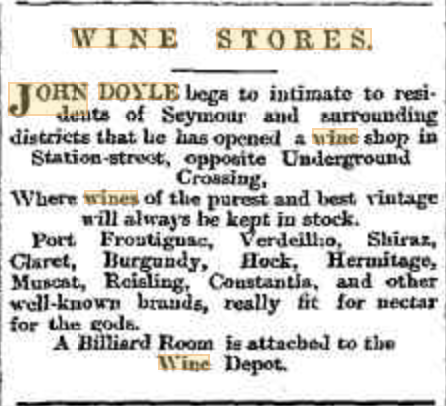
In 1888 John applies for, and presumably is granted a colonial wine licence for a store in Station Street, Seymour, directly opposite the railway station. For the next few years he regularly advertises in the local newspaper.

The advertisement below appeared in “The Seymour Express of 5 August, 1890”.

Sourced from Trove,

Elizabeth dies in 1904 at which time she is living at Worrough just outside Seymour.

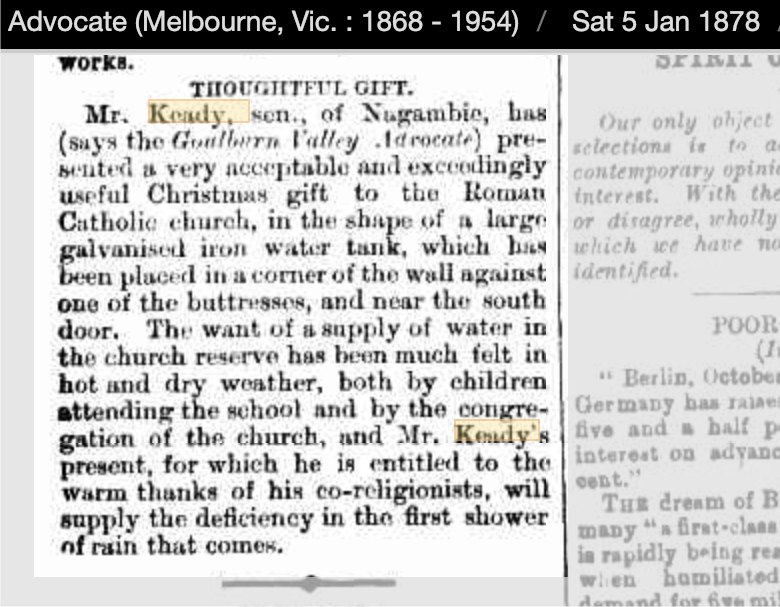
John Keady’s Valuable Gift

Christmas 1878

John Keady in his latter years moved from Melbourne and lived in Nagambie.

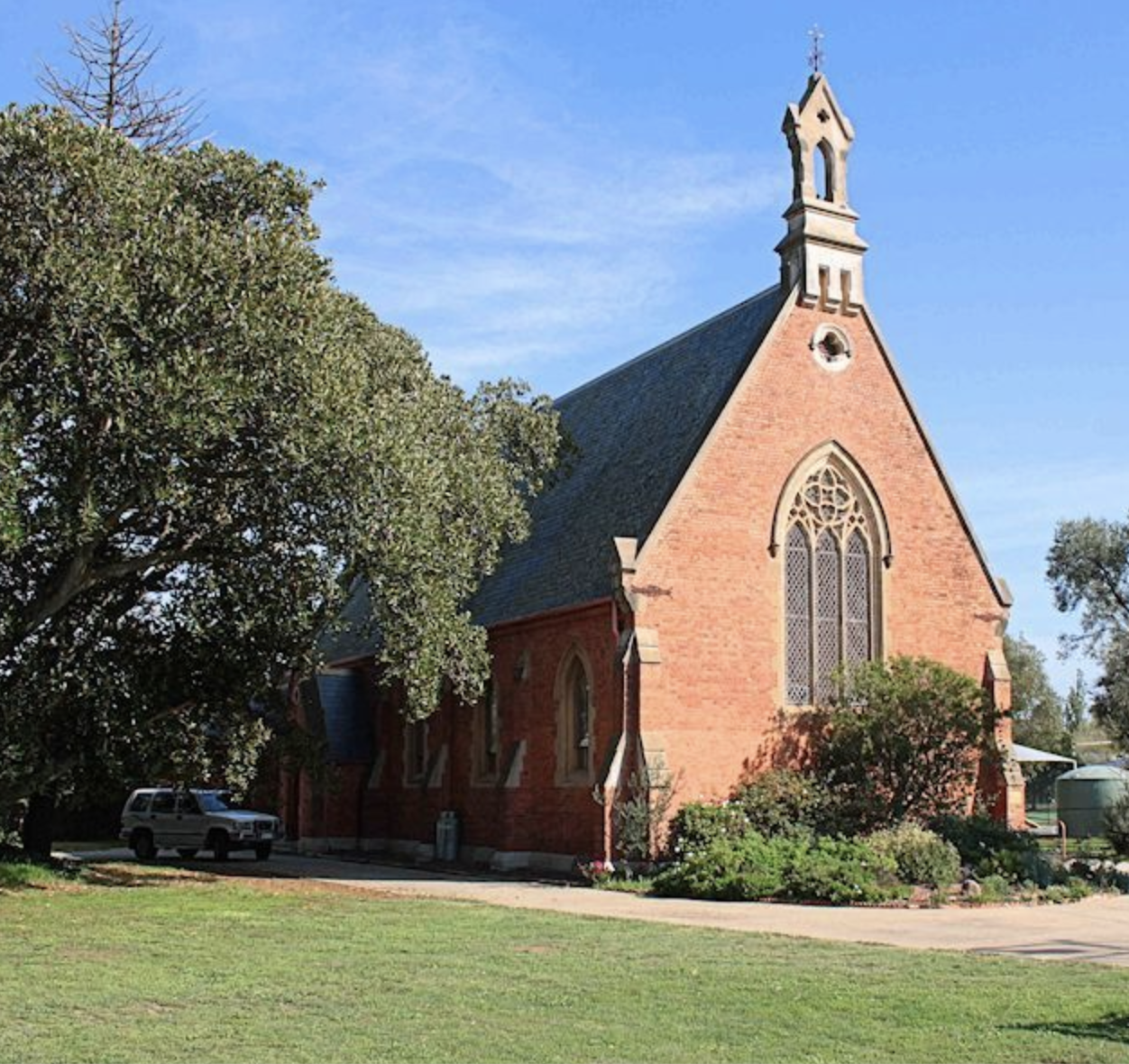
John and his family seemed to have been strong supporters of the local Catholic church at Nagambie, St Malachy’s. Many children from all branches of the Keady family were baptised at this church, and eventually this Church was the location for many funeral services, including those of John Keady on 23 December 1884 and his wife Honora on 26 June 1892.

John’s commitment to the Church is demonstrated by his gift of a water tank in late 1878.

St Malachy's Nagambie, Victoria
St Malachy’s Church, Nagambie, Victoria
Source: Trove

Mysterious Family Relationship

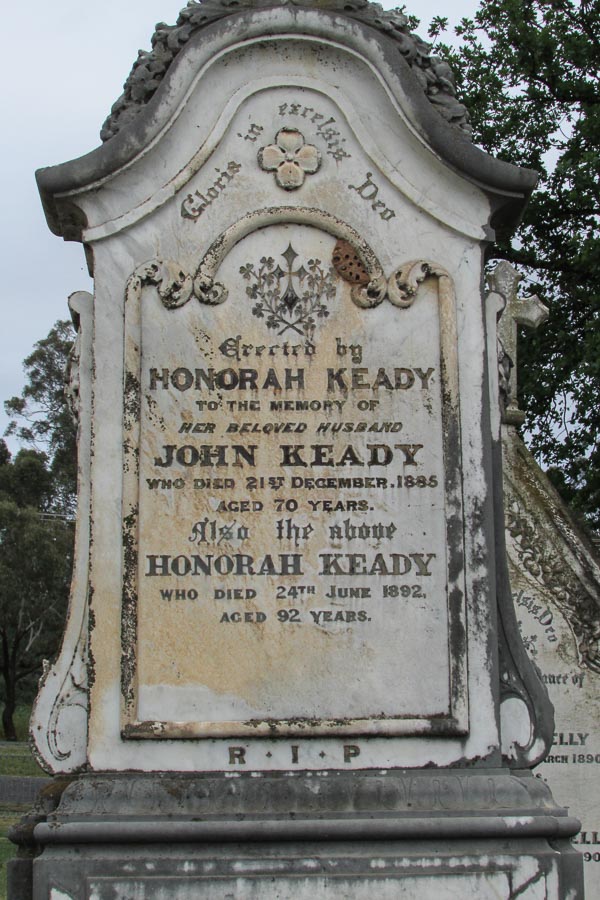
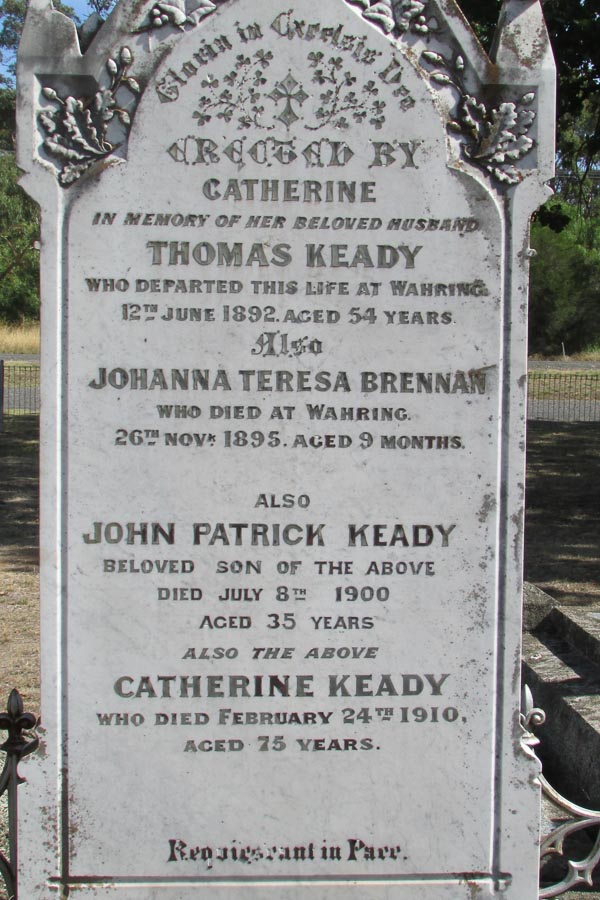
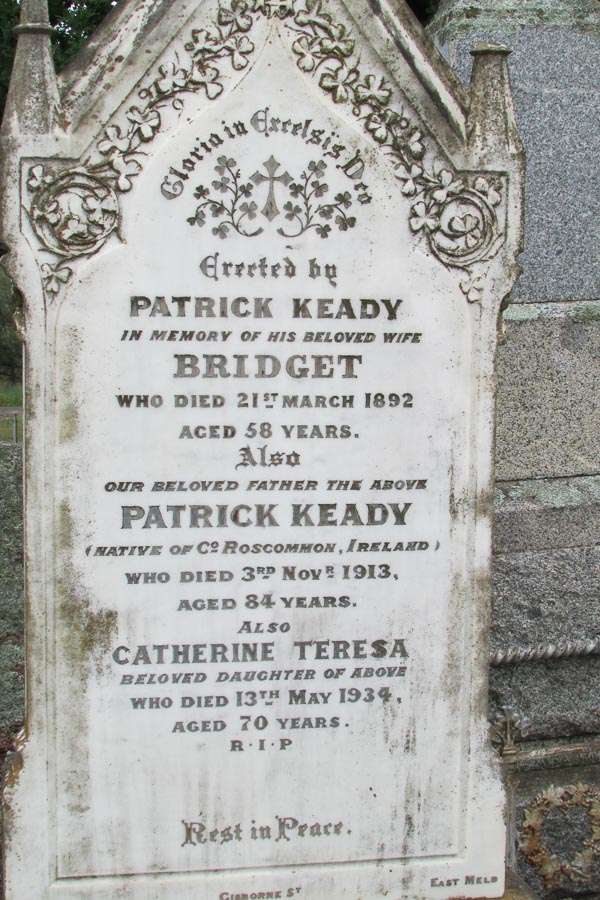
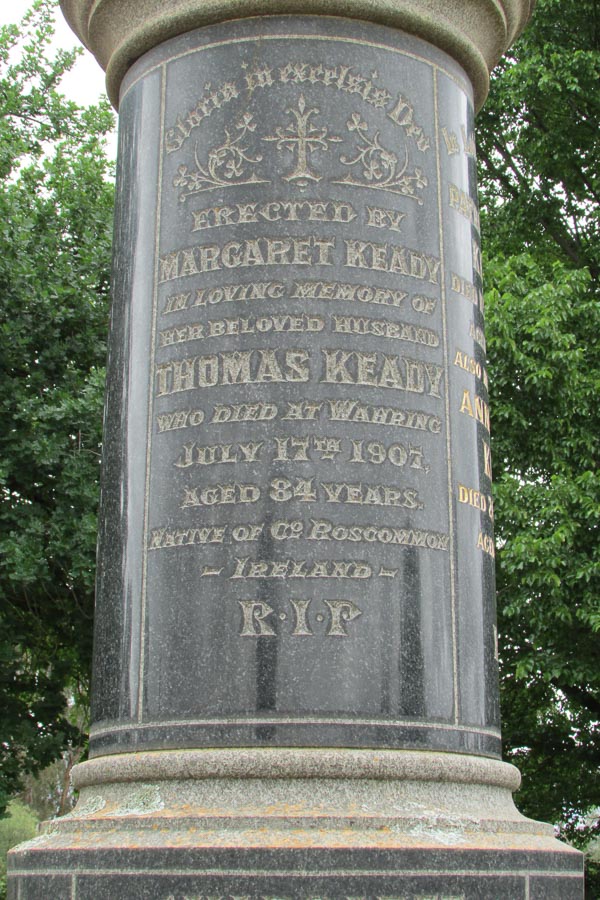
While this keadyfamily.blog is focused on the family of John and Honora Keady who arrived in Melbourne in November, 1841, there were three other “Keadys” in Melbourne by the mid 1850s. Thomas and Patrick Keady who were brothers and Daniel Keady.

Thomas arrived in June 1854 and Patrick arrived in 1857. While Thomas’s arrival is documented in the shipping records, no record can be found of Patrick, however records show his wife Bridget arrived in January 1857 with their infant daughter, Mary. The shipping records say, “gone to husband, P Keady at Pentridge”. Perhaps its no coincidence that Pentridge was where John and Honora were living at the time with their family.

Unfortunately no records can be found of Daniel Keady’s arrival. (See a picture of Daniel Keady and Family – click this link)

There is certainly circumstantial evidence that the families were related, but to date no hard evidence has been found.

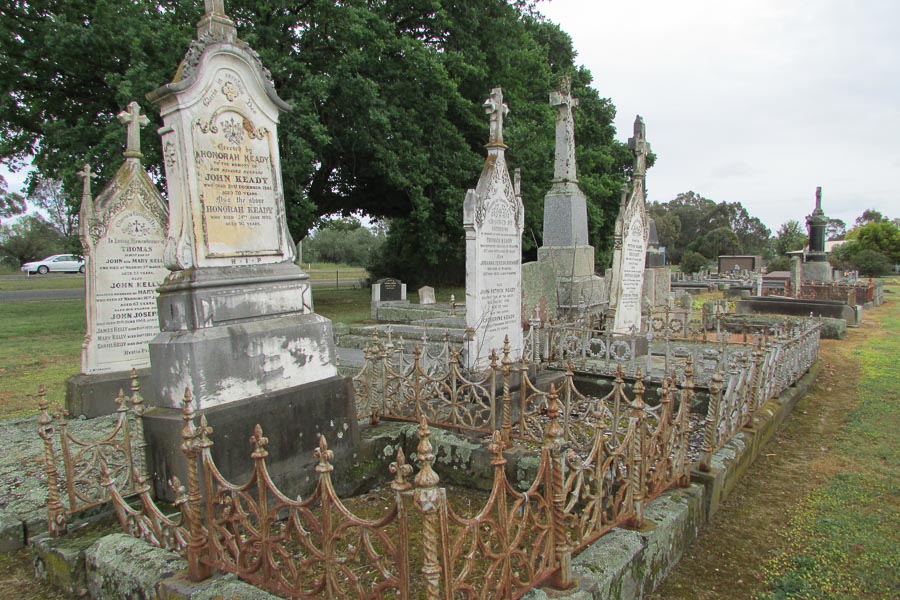
Perhaps one of the strongest hints is the way the families moved around to different regions of Victoria at similar times and eventually all ended up in the Nagambie/Murchison area. No better evidence perhaps than where they were all eventually buried. Other than Daniel who is buried at Murchison just 27km or 17 miles north, all these first Keady arrivals in Victoria are buried in a line at Nagambie Cemetery.

The Grave sites in order are:

1 John (1812-1884) and Honorah Keady (nee Kenny)(1811-1892).

2. First son of John and Honorah, Thomas Keady (1833-1892), wife Catherine Keady (nee O’Connell), their son John Patrick Keady (1863-1900), and grand daughter Johanna Teresa Brennan (1895, aged 9 months), first child of Thomas and Catherine’s daughter Catherine Agnes “Kate” Keady.

3. Patrick Nolan Keady (1830-1913), wife Bridget Keady (nee Cusack) (1834-1892), their daughters Catherine Teresa Keady (1864-1934) and Elizabeth Keady (1873-1947), neither of whom married. (Elizabeth’s name appears below the headstone.)

4. Thomas Keady (1829-1907), wife Margaret Keady (nee Kenny) (1836-1924), their son, Patrick James Keady (1870-1937) and his wife Annie Marie Keady (nee O’Dea) (1870 -1950). (Details of Patrick and Annie are enscribed on the side of the column.)

Perhaps in the near future some sleuths in the family will come up with some evidence to confirm if indeed there is a family link back in Ireland.

5 July 2019

Who was serving behind the bar ?

There have been a few stories so far recounting the extensive Keady Family expertise at pulling a beer or serving up the spirits.

It’s always exciting to put a face to a name, especially when they are a relative. So here are a few faces related to earlier blogs. You can click on the captions in the photos to take you back to the stories.

The following photo of Michael Keady (1869-1940) was taken in unfortunate circumstances, at least for Michael. It’s a New Zealand Police Gazette mug shot taken on 20 August 1926 after Michael was convicted of receiving stolen grog to stock his hotel in Auckland, New Zealand. Michael was fined 500 pounds (NZ) and received 3 months in jail.